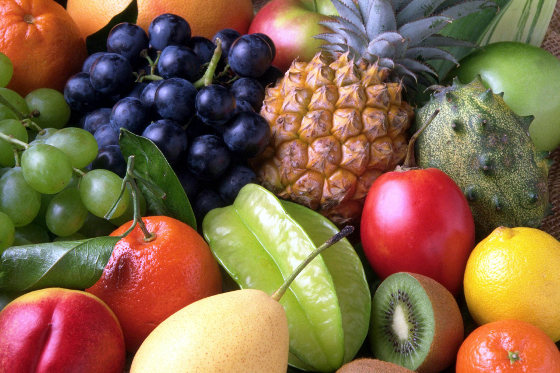
Fruits are nature’s treat for humans. They are healthy and sweet at the same time! There are very few fruits that can cause side effects that too when consumed in excess. In moderate to little high proportions  most of the fruits can serve up a big portion of your daily requirement of Vitamins, minerals and essential fiber. All fruits are different from each other yet all of them pack a punch when it comes to nutrition and their health benefits(1); the most common of them are:
most of the fruits can serve up a big portion of your daily requirement of Vitamins, minerals and essential fiber. All fruits are different from each other yet all of them pack a punch when it comes to nutrition and their health benefits(1); the most common of them are:> They carry strong anti-oxidant properties that help them block the free radical damage, strengthen our immune system and prevent or slow the spread of Cancer;
> Fruits have high water content which keeps the body hydrated and restores the lost electrolyte balance owing to heavy exercises;
> Fruits contain a good amount of dietary fiber that aids digestions, prevents constipation, ensures good bowel movement and cleanses colon;
> Most of the fruits are low in fats and the ones that have fats contain good cholesterol known as HDL (high density lipoproteins) which combats and reduces the level of bad cholesterol in the body.
> Fruits are good for bones, teeth and reduce the risk of age related degenerative diseases;
> Fruits regulate blood pressure, lower down cholesterol and are therefore excellent for heart health;
> Fruits are better than any cosmetic product for keeping your facial skin youthful, reducing spots and delaying the ageing and wrinkling;
> Fruits promote healthy hair growth, reduce hair fall and prevent premature greying.
With so many basic benefits, there is no reason one cannot have a platter of seasonal fruits everyday. There is such a huge variety that you are bound to find something that suits your taste.
[Note: All nutritional details are per 100 grams of serving]
Top 45 Fruits Health Benefits And Nutrition Facts
1. Acai Berries
Nutrition Facts: These beautiful blue black berries are high fiber berries and unlike mo st of the fruits have a significant amount of healthy fats. Acai berries are made up of 23% Carbohydrates, 71% of fats and 6% proteins.
st of the fruits have a significant amount of healthy fats. Acai berries are made up of 23% Carbohydrates, 71% of fats and 6% proteins.| Fats | 71% |
| Carbohydrates | 23% |
| Protein | 6% |
| Glycemic load | 1/100 |
| fiber | 2 gms |
| Vitamin A | 15% |
| Saturated Fat | 1.5 gms |
Health Benefits: Great for digestion, Keeps you well hydrated, cleanses colon and encourages good fats in the body.
Trivia: Each branch of Acai palm bears 700-900 Acai berries every year! Acai berries must be packed in an air-tight container immediately as they tend to rot incredibly fast on exposure to air.
2. Apples
Nutrition Facts: Apples is one of the most popular fruit that is grown worldwide and come s from the family of rose. A 100 grams of Apple contains 13.81 grams of carbohydrate with 10.39 grams of Sugar, 3.3 mcg of Fluoride and 85% water.
s from the family of rose. A 100 grams of Apple contains 13.81 grams of carbohydrate with 10.39 grams of Sugar, 3.3 mcg of Fluoride and 85% water.| Fats | 3% |
| Carbohydrates | 95% |
| Protein | 2% |
| Glycemic load | 3/100 |
| fiber | 2.4 gms |
| Vitamin C | 8% |
| Phytosterols | 12 mg |
| Water | 85.6 g |
Health benefits: Highly beneficial for strong teeth and gums, good source for fiber, prevents diabetes especially in women and incidence of gall stones.
Trivia: There are about 10,000 varieties of Apples grown in the world today! A very few people know this that Apples originated in Central Asia and not in the west. A naughty fact about Apple- Tossing an apple at a girl in ancient Greece was meant as a proposal of marriage.
3. Apricots
Nutrition Facts: Apricots come from the species of Prunus Armeniaca and a 100 grams of serving contains
11 grams of Carbohydrates of which 2 grams is Dietary fiber. It is a rich source of Vitamin A (96 mcg), Beta Carotene (1094 mcg) and Vitamin C (10 mg).
11 grams of Carbohydrates of which 2 grams is Dietary fiber. It is a rich source of
Vitamin A (96 mcg), Beta Carotene (1094 mcg) and Vitamin C (10 mg).| Fats | 7% |
| Carbohydrates | 83% |
| Protein | 10% |
| Glycemic load | 4/100 |
| fiber | 2 gms |
| Vitamin A | 39% |
| Vitamin C | 17% |
| Potassium | 7% |
| Water | 86.4 g |
Health Benefits: It is a strong Anti-oxidant which defies tumors and protects from signs of early ageing. Apricots help in regulating bowel movements, maintain healthy eyes and are great for your hair and skin.
Trivia: Apricots are natives of Asia, from where they spread to Persia, Europe and finally to the US. In Ancient China they were believed to improve the fertility of women.
4. Avocados
Nutrition Facts: Also known as Alligator pear, Avocados are a high energy fruit with 100 grams serving releasing 160 Kcal. It has a very high content of dietary fiber at 6.7 grams and 9.80 monounsaturated fats.
It is a rich source of Vitamin B2, B3, B5, b6, B9, C, E and K! You can also derive a healthy composition of trace metals like Magnesium, Manganese, Potassium and Zinc.
| Fats | 77% |
| Carbohydrates | 19% |
| Protein | 4% |
| Glycemic load | 2/100 |
| fiber | 6.7 gms |
| Vitamin C | 17% |
| Vitamin E | 10% |
| Vitamin K | 26% |
| Vitamin B2 | 8% |
| Vitamin B3 | 9% |
| Vitamin B6 | 13% |
| Folate | 20% |
| Potassium | 14% |
| Magnesium | 7% |
| Copper | 9% |
| Water | 73.2 g |
Health Benefits: Avocados are great for Cardiovascular Health, promote digestion, protect eyes, prevent and slow down age related degenerative diseases, help in weight loss and protect from free radical damage.
Trivia: They are perfect for people who are Vegan and are allergic to gluten. Avocado trees do not self-polinate, they need other Avocado trees to bear fruits.
5. Banana
Nutrition Facts: Bananas are typically a tropical fruits though they are widely grown across the world today. They are low fat and are made 22 % of carbohydrates.
Bananas are powerhouse of Vitamin B6, b5 and Vitamin C. They have a healthy composition of Manganese, Magnesium and Potassium.
B6, b5 and Vitamin C. They have a healthy composition of Manganese, Magnesium and Potassium.| Fats | 3% |
| Carbohydrates | 93% |
| Protein | 4% |
| Glycemic load | 8/100 |
| fiber | 2.6 gms |
| Vitamin C | 15% |
| Vitamin B6 | 18% |
| Potassium | 10% |
| Magnesium | 7% |
| Manganese | 13% |
| Water | 74.9 g |
Health Benefits: They lower blood pressure, are great for your heart, protect from diabetes, improves mood and helps in treating diarrhea.
Trivia: Bananas are botanically classified as Berries! There are about 1000 varieties of bananas grown across the world and 100 billion of them are consumed annually making them the 4th largest agricultural product.
6. Blackberries
Nutrition Facts: They come from Rosaceae Family and are a rich source of carbohydrates. You can derive significant amount of Vitamin C, Vitamin K and folate from these berries. They are also rich in Manganese and  Copper. Apart from these, it also contains Choline in considerable proportions.
Copper. Apart from these, it also contains Choline in considerable proportions.| Fats | 10% |
| Carbohydrates | 79% |
| Protein | 11% |
| Glycemic load | 3/100 |
| fiber | 5.3 gms |
| Vitamin C | 35% |
| Vitamin K | 25% |
| Copper | 8% |
| Manganese | 32% |
| Water | 88.1 g |
Health Benefits: Blackberries have cancer fighting properties, is great for your skin, keeps up the electrolyte level in the body, acts as astringent, helps in treating dysentry and helps in effective diabetes management.
Trivia: When they are unripe, blackberries have reddish pink color. Many varieties of Blackberries are covered in thorns and they taste best in Jams and relish.
7. Blueberries
Nutrition Facts: These are perennial berries and is grown in Europe, Asian, Africa and North America. These berries are low fat and high fiber fruits with a rich composition of Vitamin C and Vitamin K.  It is particularly high in trace metal, Manganese.
It is particularly high in trace metal, Manganese.| Fats | 5% |
| Carbohydrates | 91% |
| Protein | 4% |
| Glycemic load | 4/100 |
| fiber | 2.4 gms |
| Vitamin C | 16% |
| Vitamin K | 24% |
| Manganese | 17% |
| Water | 84.2 g |
Health Benefits: Blueberries are excellent anti-oxidants, anti-inflammatory agent, rejuvenates your skin, prevents Cancer, delays and protects from age related degenerative conditions and keeps your bladder in a healthy shape.
Trivia: For Native Americans blueberries are nothing less than divine. They believe that god himself made these berries to feed the children during famine. During the American Civil war, Blueberries were staple food of troops. Blueberries are amongst the rarest fruits that bear the blue color naturally.
8. Cantaloupe
Nutrition Facts: Also known as Musk melon and honeydew, it is a very fragrant and sweet fruit which originated in Ancient Armenia. Cantaloupe has rich composition of Vitamins like Vitamin A, Beta Carotene and Vitamin C. It contains minerals in moderation but has high concentrate of Manganese.
sweet fruit which originated in Ancient Armenia. Cantaloupe has rich composition of Vitamins like Vitamin A, Beta Carotene and Vitamin C. It contains minerals in moderation but has high concentrate of Manganese.| Fats | 5% |
| Carbohydrates | 87% |
| Protein | 8% |
| Glycemic load | 3/100 |
| fiber | 0.9 gms |
| Vitamin A | 68% |
| Vitamin C | 61% |
| Potassium | 8% |
| Water | 90.2 g |
Health Benefits: Protects lungs health, maintains cardiovascular system, treats insomnia, nurtures pregnancies, rejuvenates skin, keeps the body hydrated and prevents hair loss.
Trivia: Cantaloupe was introduced to America the the great explorer Christopher Columbus. Honey dew, musk melon etc are the different species of same fruit.
9. Cherimoya
Nutrition Facts: Cherimoya is a less known fruit and is considered to have originated in Andes.  It is a high fiber fruit which is rich source of Vitamin B2, B6 and Vitamin C. It contains trace metals and minerals in moderation which makes it a very safe fruit.
It is a high fiber fruit which is rich source of Vitamin B2, B6 and Vitamin C. It contains trace metals and minerals in moderation which makes it a very safe fruit.| Fats | 7% |
| Carbohydrates | 86% |
| Protein | 7% |
| Glycemic load | 6/100 |
| fiber | 2.3 gms |
| Vitamin C | 19% |
| Vitamin B6 | 11% |
| Potassium | 8% |
| Water | 79.4 g |
Health Benefits: It is known to for its anti-inflammatory properties, is good for your heart, optimizes immune function, improves bone health and delays appearance of signs of ageing on skin as well as hair.
Trivia: Cherimoya tree is known as Tree of Ice cream; it is all thanks to the creamy and tasty fruit it bears. Cherimoya is a sensitive fruit and gets spoilt really fast because of which it is usually available only locally where it is produced.
10. Cherry
Nutrition Facts: Cherry is a stone fruit from genus Prunus and is popular in its sweet form.  Sweet cherries are high energy and high fiber fruits with a very moderate composition of Vitamins and minerals. It mainly consists of Carbohydrates with hardly any fats.
Sweet cherries are high energy and high fiber fruits with a very moderate composition of Vitamins and minerals. It mainly consists of Carbohydrates with hardly any fats.| Fats | 3% |
| Carbohydrates | 91% |
| Protein | 6% |
| Glycemic load | 5/100 |
| fiber | 2.1 gms |
| Vitamin C | 12% |
| Potassium | 6% |
| Water | 82.2 g |
Health Benefits: It helps in controlling diabetes, improves the quality of sleep, known to reduce and delay skin ageing, reduce muscle pain, manages arthritis and prevents cancer.
Trivia: Darker the color of cherry, healthier the fruit. Cherry has thousand varieties but only ten are produced commercially. One tree of cherry can produce almost 7000 cherries every year!
11. Choke berry
Nutrition Facts: It is native to North America and belongs to the family of Rosaceaea.  They come on three colors- Black, Red and sometimes in purple. It is low in calories and high in dietary fiber. Chokeberries have a well balanced composition of Vitamin A, C, E, K and folate. The mineral density of chokeberries mostly include Iron, Calcium, Potassium, Manganese and Zinc.
They come on three colors- Black, Red and sometimes in purple. It is low in calories and high in dietary fiber. Chokeberries have a well balanced composition of Vitamin A, C, E, K and folate. The mineral density of chokeberries mostly include Iron, Calcium, Potassium, Manganese and Zinc.| Fats | 6% |
| Carbohydrates | 87% |
| Protein | 7% |
| Glycemic load | 9/100 |
| fiber | 17 gms |
| Vitamin K | 37% |
| Vitamin B6 | 10% |
| Potassium | 9% |
| Manganese | 10% |
| Water | 61.5 g |
Health Benefits: Chokeberries help in controlling blood cholesterol, chronic inflammation, cancer, reduce the risk of cardiovascular diseases, prevent ulcers and maintain liver health.
Trivia: Chokeberries boast of one of the highest concentrate of anti-oxidants in fruits. The term chokeberry comes from the fact that this berry leaves a sensation in the mouth and throat making it feel dry like partial choking!
12. Cranberries
Nutrition Facts: Cranberries grow on dwarf shrubs and are white when unripe. Completely ripe  cranberries have deep red color and they are high on carbohydrates with very significant amount of dietary fiber but very low in fat composition. It is particularly rich in Vitamin C and Vitamin E. In trace metals, it has high quantity of Manganese.
cranberries have deep red color and they are high on carbohydrates with very significant amount of dietary fiber but very low in fat composition. It is particularly rich in Vitamin C and Vitamin E. In trace metals, it has high quantity of Manganese.| Fats | 2% |
| Carbohydrates | 95% |
| Protein | 3% |
| Glycemic load | 2/100 |
| fiber | 4.6 gms |
| Vitamin C | 22% |
| Vitamin E | 6% |
| Vitamin K | 6% |
| Manganese | 18% |
| Water | 87.1 g |
Health Benefits: It has strong anti-oxidant and anti-inflammatory properties, keeps your body well hydrated, is great for your facial skin, has anti-cancer properties, protects liver and its juice cures UTI (Urinary Tract Infection).
Trivia: Cranberries are used by Native American as color dye and used stewed cranberries to cure arrow wounds! Thanksgiving in America and Canada is incomplete without serving of this sweet sour tarty berries.
13. Dates
Nutrition Facts: Dates are one of the oldest cultivated edible fruits and are believed to have  originated somewhere around Iraq. Dates are high energy, dietary fiber and high sugar fruit. But its use as a substitute to sugar is considered far healthier than the artificial Sugar itself. It is a rich source of Vitamin B5 and B6. It is particularly known for its trace metal composition which has Manganese, Magnesium, Potassium and Phosphorus.
originated somewhere around Iraq. Dates are high energy, dietary fiber and high sugar fruit. But its use as a substitute to sugar is considered far healthier than the artificial Sugar itself. It is a rich source of Vitamin B5 and B6. It is particularly known for its trace metal composition which has Manganese, Magnesium, Potassium and Phosphorus.| Fats | 0% |
| Carbohydrates | 98% |
| Protein | 2% |
| Glycemic load | 39/100 |
| fiber | 6.7 gms |
| Vitamin B3 | 8% |
| Vitamin B6 | 12% |
| Potassium | 20% |
| Magnesium | 14% |
| Manganese | 15% |
| Copper | 18% |
| Water | 21.3 g |
Health Benefits: It alleviates constipation, prevents Anemia, provides instant energy, is good for heart, controls diarrhea and is generally good for regulating digestion.
Trivia: Dates Palm are national symbols of Arabia and Israel. They have a rare specialty which allows them to be irrigated with Ocean water and need at least 100 days of strong sunshine to flourish in the best way. They are sturdy and very tolerant to nature’s elements.
14. Durian Fruit
Nutrition Facts: This fruit belongs to the Genus Durio and has hard thick and thorny covering . The fruit itself is soft, creamy, juicy and emits strong odor. This fruit is a high energy and high carbohydrate fruit. It contains significant amount of Vitamin B1, B2, B6, Folate and Vitamin C. It also has a rich composition of trace metals like Manganese, Magnesium and Potassium.
. The fruit itself is soft, creamy, juicy and emits strong odor. This fruit is a high energy and high carbohydrate fruit. It contains significant amount of Vitamin B1, B2, B6, Folate and Vitamin C. It also has a rich composition of trace metals like Manganese, Magnesium and Potassium.| Fats | 30% |
| Carbohydrates | 67% |
| Protein | 3% |
| Glycemic load | 10/100 |
| fiber | 3.8 gms |
| Vitamin C | 33% |
| Vitamin B1 | 25% |
| Vitamin B2 | 12% |
| Vitamin B6 | 16% |
| Potassium | 12% |
| Folate | 9% |
| Copper | 10% |
| Magnesium | 8% |
| Manganese | 16% |
| Water | 65 g |
Health Benefits: It aids digestion, improves blood flow, boosts healthy cholesterol, prevents anemia, improves metabolism and nourishes pregnancy.
Trivia: Durian is not a great fruit if take in excess by those who want to shed weight but is a great addition to a weight loss regimen in limited quantities. The smell of this fruit is hated by a lot of people and is termed as “worst smelling fruit in the World”!
15. Figs
Nutrition Facts: Figs are from the family- Moraceae and genus Ficus. It is a native of  Middle East and Western Asia. Fig is powerhouse of energy and has a high sugar and fiber content. It has a complete composition of Vitamins in form of Vitamin A, B2, B5, B6 and Vitamin K. It also contains a rich combination of trace metals- Calcium, Iron, Magnesium, Manganese, Phosphorus and Zinc.
Middle East and Western Asia. Fig is powerhouse of energy and has a high sugar and fiber content. It has a complete composition of Vitamins in form of Vitamin A, B2, B5, B6 and Vitamin K. It also contains a rich combination of trace metals- Calcium, Iron, Magnesium, Manganese, Phosphorus and Zinc.| Fats | 3% |
| Carbohydrates | 94% |
| Protein | 3% |
| Glycemic load | 6/100 |
| fiber | 2.9 gms |
| Vitamin K | 6% |
| Vitamin B6 | 6% |
| Potassium | 7% |
| Water | 79.1 g |
Health Benefits: Figs can provide a lot of energy almost instantly. They are high in antioxidants, cure constipation, prevents gastrointestinal disorders, is good for skin, reduces the risk of Colon cancer and regulates blood pressure.
Trivia: The blossoms of figs are inside the fruit which give rise to so many tiny seeds that are edible and make it crunchy. Earlier Olympic athletes used to eat figs as a part of special diet recommended to them. Half cup of Figs have calcium equal to half glass of milk!
16. Goose Berries
Nutrition Facts: Gooseberries come from the same species as currants i.e Ribes. It is native t o Europe and has bitter sour taste. Goose berries are made up majorly of carbohydrates with high amount of Dietary fiber. It is a very rich source of Vitamin C and Manganese. Other nutrients are in moderate quantities in these berries.
o Europe and has bitter sour taste. Goose berries are made up majorly of carbohydrates with high amount of Dietary fiber. It is a very rich source of Vitamin C and Manganese. Other nutrients are in moderate quantities in these berries.| Fats | 11% |
| Carbohydrates | 82% |
| Protein | 7% |
| Glycemic load | 2/100 |
| fiber | 4.3 gms |
| Vitamin C | 46% |
| Manganese | 7% |
| Water | 87.9 g |
Health Benefits: Goose berries enhance digestion, have strong anti-oxidant properties, improve the quality of hair, boost calcium absorption in the body, relieve from menstrual cramps and is very effective in controlling diabetes.
Trivia: If you consume water right after chewing on a gooseberry, it gives it out a sweet aftertaste. These berries are usually consumed in form of chewies, pickles and preserves and are rarely eaten in their natural form.
Know More: Gooseberry Health Benefits
17. Grapes
Nutrition Facts: Grapes are berries and come from the Genus Vitis. Grapes have high sugar and healthy water content. They are a rich source of Vitamin B1, B2, B6 and Vitamin K. It is a safe fruit to consume because the composition of trace metals in this fruit is moderate.
and healthy water content. They are a rich source of Vitamin B1, B2, B6 and Vitamin K. It is a safe fruit to consume because the composition of trace metals in this fruit is moderate.| Fats | 2% |
| Carbohydrates | 94% |
| Protein | 4% |
| Glycemic load | 6/100 |
| fiber | 0.9 gms |
| Vitamin C | 18% |
| Copper | 6% |
| Water | 80.5 g |
Health Benefits: They keep you well hydrated, flush toxins from the body, help in managing asthma, prevents heart diseases, reduce fatigue, aids digestion and is good for bone health.
Trivia: Grapes are new to America and were brought here some 300 years ago. About 2.5 pounds of grapes go into making one bottle of wine. Grapes come in green, black , red, yellow and even blue color! Raisins are sun dried grapes.
Know More: Grapes Health Benefit
18. Grapefruit
Nutrition Facts: Though it has “grape” in its name but grapefruit is not related to them in anyway and look more like oranges. Grapefruits have a rich water content and contain carbohydrates with a high sugar proportions. It has a very high Vitamin C content and rest of Vitamins and minerals are found in smaller quantities.
anyway and look more like oranges. Grapefruits have a rich water content and contain carbohydrates with a high sugar proportions. It has a very high Vitamin C content and rest of Vitamins and minerals are found in smaller quantities.| Fats | 3% |
| Carbohydrates | 91% |
| Protein | 6% |
| Glycemic load | 3/100 |
| fiber | 1.6 gms |
| Vitamin A | 23% |
| Vitamin C | 52% |
| Potassium | 4% |
| Water | 88.1 g |
Health Benefits: Grapefruit is known for its antioxidant properties, keeps you well hydrated, gives radiant skin, reduces risk of stroke, controls high blood pressure, has cancer preventing characteristics and prevents Asthma.
Trivia: Grapefruit actually evolved from another fruit which is native to Indonesia and Malaysia. Grapefruit is made 75% of water and if freshly squeezed juice is frozen immediately then it retains all its goodness for up to a week!
Know More: Grapefruit Health Benefits
19. Guava
Nutrition Facts: Guava is a tropical fruit and the most common variety is called an Apple guava.  Guava is high energy and high sugar fruit with an impressive proportion of dietary fiber. It has the highest amount of Vitamin C, more than oranges! It also contains Vitamin B3, B5, B6 and Folate. It also has a healthy combination of Magnesium, Manganese and Potassium.
Guava is high energy and high sugar fruit with an impressive proportion of dietary fiber. It has the highest amount of Vitamin C, more than oranges! It also contains Vitamin B3, B5, B6 and Folate. It also has a healthy combination of Magnesium, Manganese and Potassium.| Fats | 12% |
| Carbohydrates | 75% |
| Protein | 13% |
| Glycemic load | 8/100 |
| fiber | 5.4 gms |
| Vitamin A | 12% |
| Vitamin C | 381% |
| Folate | 12% |
| Potassium | 12% |
| Copper | 11% |
| Water | 80.8 g |
Health Benefits: It is a very rich anti-oxidant, is good for teeth and gums, is good for digestion, helps in diabetes management, improves vision, nurtures pregnancy and balances electrolyte levels in the body.
Trivia: The leaves of Guava have a toxin which discourages the growth of any other plants near a Guava tree. Guava is used as a popular salad ingredient and in fruit punches all around the world.
Know More: Guava Health Benefits
20. Jackfruit
Nutrition Facts: Jackfruit comes from Mulberry family and is a native of South and South East Asia particularly India. It contains high proportion of Sugar and dietary fiber. It is a rich source of Vitamin B1, B6 and Vitamin C. Amongst the trace metals, it contains high quantities of Magnesium and Potassium.
East Asia particularly India. It contains high proportion of Sugar and dietary fiber. It is a rich source of Vitamin B1, B6 and Vitamin C. Amongst the trace metals, it contains high quantities of Magnesium and Potassium.| Fats | 3% |
| Carbohydrates | 92% |
| Protein | 5% |
| Glycemic load | 10/100 |
| fiber | 1.6 gms |
| Vitamin C | 11% |
| Vitamin B2 | 6% |
| Potassium | 9% |
| Copper | 9% |
| Manganese | 10% |
| Water | 73.2 g |
Health Benefits: It optimizes immune function, provides instant energy, maintains blood pressure, ensures healthy cardiovascular system, improves digestion, is good for eyesight and slows down the process of ageing.
Trivia: Jackfruit is the largest tree borne fruit and can weigh up to 50 kilos when completely grown up and reach up to a size of one meter! The smell and appearance of Jackfruit is akin to Durian but they are not a related species.
Know More: Jackfruit Health Benefits
21. Kiwi Fruit
Nutrition Facts: Kiwi is a berry and is native to Northern China with some species originating from India and Siberia as well. Kiwi has a good amount of dietary fiber and is a rich source of Vitamin C, Vitamin B5, Folate and Vitamin E. They contain significant amount of Potassium with other metals in moderate quantities.
from India and Siberia as well. Kiwi has a good amount of dietary fiber and is a rich source of Vitamin C, Vitamin B5, Folate and Vitamin E. They contain significant amount of Potassium with other metals in moderate quantities.| Fats | 7% |
| Carbohydrates | 87% |
| Protein | 6% |
| Glycemic load | 4/100 |
| fiber | 3 gms |
| Vitamin C | 155% |
| Vitamin K | 50% |
| Potassium | 9% |
| Water | 83.1 g |
Health Benefits: Kiwi protects from free radical damage, is anti-cancer, alleviates symptoms of Asthma, maintains cardiovascular health, slows down macular degeneration and controls diabetes.
Trivia: Kiwi does not self pollinate and needs one male and female variety to reproduce. The largest producers of Kiwi fruit are New Zealand, Italy and Chile. Kiwi tree produces fruit for over 30 years and can survive for up to 50 years.
Know More: Kiwi Fruit Health Benefits
Most Popular This Week:
Avoid Botox – Do This Now
Dieters Are In For A Big Surprise!
1 Odd Trick Stops Erectile Dysfuntion
Kelowna Woman Avoids Surgery With Incredible Weight Loss Method!
12 Celebs Ruined By Drugs
Kelowna Woman Shocks Doctors As $3 ‘Skinny Pill’ Sweeps Canada
This Skin Trick Has Kelowna Women Looking Younger Than Ever!
67 Terrifying Medical Conditions That Are Really Rare
Sponsored by Revcontent

22. Kumquat
Nutrition Facts: Kumquat belongs to the family Rutaceae and resembles oranges closely in  terms of appearance and taste. Kumquat has a very high fiber content in raw form and is a rich source of Vitamin C, Vitamin B2, Iron, Magnesium, Manganese and Calcium.
terms of appearance and taste. Kumquat has a very high fiber content in raw form and is a rich source of Vitamin C, Vitamin B2, Iron, Magnesium, Manganese and Calcium.| Fats | 10% |
| Carbohydrates | 81% |
| Protein | 9% |
| Glycemic load | 4/100 |
| fiber | 6.5 gms |
| Vitamin C | 73% |
| Manganese | 7% |
| Water | 80.8 g |
Health Benefits: Kumquat increase immunity, Protects from cancer, improves Cardiovascular health, protects from Diabetes, is an anti-inflammatory agent, delays ageing, expedites healing and improves bone health.
Trivia: Kumquat has a sweet skin so it can be eaten whole including the skin. The flesh of this fruit is quite sour. They do not belong to citrus family but have their very own genus!
Know More: Kumquat Health Benefits
23. Lemon
Nutrition Facts: Lemon is native to Asia and is extremely sour fruit. Lemon has an impressive amount of Dietary fiber and almost equal amount of Sugar content. It is a rich source of Vitamin C, Vitamin B6 and has rest of the Vitamins and minerals in moderate quantities.
amount of Dietary fiber and almost equal amount of Sugar content. It is a rich source of Vitamin C, Vitamin B6 and has rest of the Vitamins and minerals in moderate quantities.| Fats | 13% |
| Carbohydrates | 63% |
| Protein | 14% |
| Glycemic load | 3/100 |
| fiber | 4.7 gms |
| Vitamin C | 128% |
| Copper | 13% |
| Water | 87.4 g |
Health Benefits: It strengthens immunity, protects from common diseases like cold and flu, aids weight loss, regulates ideal blood pressure, improves digestion, alleviates fever, brightens skin tone, restores electrolyte balance and application of skin removes scars and spots gradually.
Trivia: Lemon acts as a natural bleaching agent. The tree is in bloom the entire year and one tree can produce over 200 Kgs of lemons in a year! 5%-6% of lemon is made of Citric acid which makes it very sour and tarty.
Know More: Lemon Health Benefits
24. Loquat Fruit
Nutrition Facts: Loquat belongs to family Rosaceae and is a native to South- Central China.  Loquat is a very safe fruit as the nutritional composition of this fruit is very moderate. It is high in dietary fiber and is rich source of Vitamin A, Vitamin B6 and Manganese.
Loquat is a very safe fruit as the nutritional composition of this fruit is very moderate. It is high in dietary fiber and is rich source of Vitamin A, Vitamin B6 and Manganese.| Fats | 4% |
| Carbohydrates | 93% |
| Protein | 3% |
| Glycemic load | 3/100 |
| fiber | 1.7 gms |
| Vitamin A | 31% |
| Potassium | 8% |
| Water | 86.7 g |
Health Benefits: Loquat protects from Colon Cancer, improves skin health, maintains blood pressure, increases blood formation, strengthens bones, improves eye sight and protects from Cancer.
Trivia: Loquat is a popular Ornamental plant and bear fragrant flowers. They need sunny days to grow well and are drought tolerant.
Know More: Loquat Fruit Health Benefits
25. Lychee
Nutrition Facts: It is the only member of genus Litchi in Soapberry family. This fragrant, juicy  and very sweet fruit is healthy source of Sugar, dietary fiber and is rich in water content. It has high amount of Vitamin C and has other vitamins and minerals in low but complete composition.
and very sweet fruit is healthy source of Sugar, dietary fiber and is rich in water content. It has high amount of Vitamin C and has other vitamins and minerals in low but complete composition.| Fats | 6% |
| Carbohydrates | 90% |
| Protein | 4% |
| Glycemic load | 5/100 |
| fiber | 1.3 gms |
| Vitamin C | 119% |
| Copper | 7% |
| Water | 81.8 g |
Health Benefits: It strengthens immunity, protects from free radical damage, boosts blood production and purification, optimizes metabolism, great for skin and takes care of your Cardiovascular health.
Trivia: Lychees do not ripe after being harvested. Lychee is also used in perfume and it has a classic combination with Rose perfume and rose flavor.
Know More: Lychee Health Benefits
26. Mango
Nutrition Facts: Mango is supremely tasty fruit which belongs to the genus Mangifera and is a native of South and South East Asia. It is high on sugar and dietary fiber. Mango is a rich source of Vitamin A, Vitamin B6, folate and Vitamin C. The nutrients in form of mineral and trace metals are present in strictly moderate quantities.
native of South and South East Asia. It is high on sugar and dietary fiber. Mango is a rich source of Vitamin A, Vitamin B6, folate and Vitamin C. The nutrients in form of mineral and trace metals are present in strictly moderate quantities.| Fats | 3% |
| Carbohydrates | 94% |
| Protein | 3% |
| Glycemic load | 5/100 |
| fiber | 1.8 gms |
| Vitamin A | 15% |
| Vitamin C | 46% |
| Vitamin B6 | 7% |
| Copper | 6% |
| Water | 81.7 g |
Health Benefits: Mango is rich in anti-oxidants, improves eye health, lowers cholesterol, improves digestion if taken in moderation and boosts immunity.
Trivia: Mango is the national fruit of India, Pakistan and Philippines. Mango tree is national tree of Bangladesh. It is a summer fruit and has over thousand varieties. They are close relatives of Cashew and Pistachios!
Know More: Mango Health Benefits
27. Mangosteen
Nutrition Facts: Mangosteen is evergreen and is believed to have originated in Indonesia.  It has significant amount of fiber and is a rich source of Vitamin B9 and has considerable amount of Vitamin B1, B2 and Manganese. Rest of the other nutrients are found in smaller quantities in Mangosteen.
It has significant amount of fiber and is a rich source of Vitamin B9 and has considerable amount of Vitamin B1, B2 and Manganese. Rest of the other nutrients are found in smaller quantities in Mangosteen.| Fats | 7% |
| Carbohydrates | 91% |
| Protein | 2% |
| Glycemic load | 5/100 |
| fiber | 1.8 gms |
| Vitamin C | 5% |
| Folate | 8% |
| Manganese | 5% |
| Water | 80.9 g |
Health Benefits: It is a low calorie fruit which has impressive antioxidant properties, improves blood flow, lowers bad cholesterol in the body, is anti-bacterial and anti-fungal in nature, expedites cell repair and aids weight loss.
Trivia: It is national fruit of Thailand and is known for its amazingly delicious taste. The Mangosteen tree can grow up to 75 feet and it takes about 10 years for the tree to bear its first fruit!
Know More: Mangosteen Health Benefits
28. Mulberries
Nutrition Facts: Mulberries cover 10-16 species of deciduous trees collectively called Mulberry. It is a rich source of Carbohydrates and contains high quantities of Vitamin B2, Vitamin C, Copper and Iron. It also has phytonutrients like beta Carotene and Lutein-zeaxanthin.
It is a rich source of Carbohydrates and contains high quantities of Vitamin B2, Vitamin C, Copper and Iron. It also has phytonutrients like beta Carotene and Lutein-zeaxanthin.| Fats | 8% |
| Carbohydrates | 81% |
| Protein | 11% |
| Glycemic load | 4/100 |
| fiber | 1.7 gms |
| Vitamin C | 61% |
| Vitamin K | 10% |
| Iron | 10% |
| Water | 87.7 g |
Health Benefits: It slows down ageing, prevent cancer, treats anemia, controls diabetes, improves cardiovascular health, boosts immunity, promotes hair growth, purifies blood and cures chronic constipation.
Trivia: White Mulberry plants are used in Sericulture which means rearing of silk worms. Black mulberries are known to have the best taste. The largest trees of this species can reach up to 75 feet in height!
Know More: Mulberries Health Benefits
29. Olives
Nutrition Facts: Olives come from the family Oleaceae and is widely cultivated for its fruit as  well as their oil. Olives are high energy and are majorly made up of mono-unsaturated fats which makes them super healthy. They are a powerhouse of Vitamin E and sodium.
well as their oil. Olives are high energy and are majorly made up of mono-unsaturated fats which makes them super healthy. They are a powerhouse of Vitamin E and sodium.| Fats | 88% |
| Carbohydrates | 10% |
| Protein | 2% |
| Glycemic load | 1/100 |
| fiber | 3.3 gms |
| Vitamin E | 19% |
| Sodium | 65% |
| Copper | 6% |
| Manganese | 13% |
| Water | 75.3 g |
Health Benefits: Olives control the bad cholesterol in the body, regulate high blood pressure, aid weight loss, delay the onset of degenerative diseases, prevent Anemia and improve fertility in women.
Trivia: 11 pounds of olives need to be pressed to produce 32 ounces of Olive oil. It is one of the healthiest oils in the world. Burning olive oil reduces its goodness significantly, this is why unlike other oils you can add the vegetables for cooking when olive oil is still heating.
30. Orange
Nutrition Facts: Orange belongs to Citrus species and they account for about 70% production  of the fruits of this species. Oranges have a high content of water and an impressive composition of Dietary fiber and Sugar. Oranges are particularly rich in Vitamin C, Vitamin B1, B5 and Folate.
of the fruits of this species. Oranges have a high content of water and an impressive composition of Dietary fiber and Sugar. Oranges are particularly rich in Vitamin C, Vitamin B1, B5 and Folate.| Fats | 3% |
| Carbohydrates | 93% |
| Protein | 4% |
| Glycemic load | 8/100 |
| fiber | 2.6 gms |
| Vitamin C | 15% |
| Vitamin B6 | 18% |
| Potassium | 10% |
| Magnesium | 7% |
| Manganese | 13% |
| Water | 74.9 g |
Health Benefits: Oranges are rich in antioxidants, purify blood, fight free radicals, build up the immunity of the body, reduces risk of developing Cancer, boosts heart health and regulates healthy heart function.
Trivia: The color orange is derived from this fruit and the flavor of orange assumes the coveted third place as world favorite after chocolate and Vanilla. In Victorian Britain Oranges were gifted dueing Christmas.
Know More: Orange Health Benefits
31. Papaya
Nutrition Facts: Papaya is the sole species in the genus Carica and is a native to tropics of America. It is a low fat, high carbohydrate and high fiber fruit. It has a high content of Vitamin A, Folate, Vitamin C and Magnesium.
America. It is a low fat, high carbohydrate and high fiber fruit. It has a high content of Vitamin A, Folate, Vitamin C and Magnesium.| Fats | 3% |
| Carbohydrates | 92% |
| Protein | 5% |
| Glycemic load | 2/100 |
| fiber | 1.8 gms |
| Vitamin A | 22% |
| Vitamin C | 103% |
| Folate | 10% |
| Potassium | 7% |
| Water | 88.8 g |
Health Benefits: Papaya is beneficial in bettering the eyesight and maintaining eye health, lowers cholesterol, aids healthy weight loss, boosts immunity, controls diabetes, improves digestion, reduces menstrual cramps and pain, promotes healthy skin and is good for hair growth.
Trivia: The flowers of Papaya can contain both male and female organs. Papaya leaves are used for treating Malaria and their stems and bark are used for making ropes!
Know More: Papaya Health Benefits
32. Passion Fruit
Nutrition Facts: Passion fruit comes from species of Passion flower which is native of Brazil, Paraguay and Argentina. It is a rich source of Vitamin A, Beta Carotene, Vitamin B2, B3, B6 and Vitamin C. It also contains trace metals like Iron, Magnesium, Phosphorus and Potassium in significant quantities.
Brazil, Paraguay and Argentina. It is a rich source of Vitamin A, Beta Carotene, Vitamin B2, B3, B6 and Vitamin C. It also contains trace metals like Iron, Magnesium, Phosphorus and Potassium in significant quantities.| Fats | 6% |
| Carbohydrates | 86% |
| Protein | 8% |
| Glycemic load | 6/100 |
| fiber | 10.4 gms |
| Vitamin A | 25% |
| Vitamin C | 50% |
| Vitamin B2 | 8% |
| Iron | 9% |
| Potassium | 10% |
| Water | 72.9 g |
Health Benefits: It protects from Cancer, lowers blood pressure, acts as a colon cleanser, improves eye sight, increases hemoglobin, aids digestion, boosts immunity, ensures cardiovascular health and alleviates the symptoms of Asthma.
Trivia: Botanically, Passion fruit is a berry and have four common varieties viz. Yellow, purple, Panama and Banana. Best passion fruits have smooth to slightly wrinkled skin and are heavy for their size.
Know More: Passion Fruit Health Benefits
33. Peaches
Nutrition Facts: Peaches belong to genus Prunus and are native to North West China. It is rich in dietary fiber and is a healthy source Vitamin B3, Vitamin C and Vitamin E. The mineral and trace metal composition is present in moderate quantities.
dietary fiber and is a healthy source Vitamin B3, Vitamin C and Vitamin E. The mineral and trace metal composition is present in moderate quantities.| Fats | 5% |
| Carbohydrates | 87% |
| Protein | 8% |
| Glycemic load | 3/100 |
| fiber | 1.5 gms |
| Vitamin A | 8% |
| Vitamin C | 11% |
| Potassium | 5% |
| Water | 88.9 g |
Health Benefits: Peach is a perfect snack for weight losing diet, reduces hair loss, acts as natural de-worming agent in the intestines, is a natural diuretic, control diabetes, inhibits tumor growth, strengthens kidney function and improves the quality of sleep.
Trivia: There are about 700 varieties of Peaches available. Peach oil is an excellent moisturizer and ancient Romans used to call them Persian apples. A peach plant can take up to four years to bear the first fruits.
Know More: Peaches Health Benefits
34. Pears
Nutrition Facts: Pears come from genus Pyrus and family Rosaceaea. Pears have a high dietary fiber and sugar content. Pears are a very safe fruit with moderate composition of Vitamins and minerals in them that make up 1-4% of dietary requirement with a 100 grams serving.
fiber and sugar content. Pears are a very safe fruit with moderate composition of Vitamins and minerals in them that make up 1-4% of dietary requirement with a 100 grams serving.| Fats | 2% |
| Carbohydrates | 96% |
| Protein | 2% |
| Glycemic load | 3/100 |
| fiber | 3.1 gms |
| Vitamin C | 7% |
| Phytosterols | 8.0 mg |
| Water | 83.7 g |
Health Benefits: Pears have anti-carcinogen agents that make it anti-cancer. It is good for controlling blood pressure, cleanses colon, lends instant energy, is anti-inflammatory, aids faster healing, prevents Osteoporosis, controls blood sugar level and reduces bad cholesterol in the body.
Trivia: About 3000 varieties of pears are grown world wide and China is their largest producer. Pear leaves were smoked in Europe before Tobacco was introduced in the continent. Pear juice is considered to be safe as first juice for infants.
Know More: Pears Health Benefits
35. Persimmon Fruits
Nutrition Facts: Persimmon belongs to genus Diospyros and is botanically classified as a berry. It is a high carbohydrate ingredient with a lot of dietary fiber and is low on fats. Persimmon fruit is a rich source of Vitamin A, Vitamin B6 and Vitamin C. It is particularly loaded with Manganese.
berry. It is a high carbohydrate ingredient with a lot of dietary fiber and is low on fats. Persimmon fruit is a rich source of Vitamin A, Vitamin B6 and Vitamin C. It is particularly loaded with Manganese.| Fats | 2% |
| Carbohydrates | 95% |
| Protein | 3% |
| Glycemic load | 5/100 |
| fiber | 3.6 gms |
| Vitamin A | 33% |
| Vitamin C | 13% |
| Magnesium | 7% |
| Manganese | 18% |
| Water | 80.3 g |
Health Benefits: Persimmon fruit promotes weight loss, protects eye sight, nourishes eyes, improves digestion, fights cancer, delays ageing, boosts immune function and is great for cardiovascular health.
Trivia: The cream colored flowers of Persimmon are female whereas pink are male! Persimmons have astringent properties and the unripe one can leave a dry trail in your mouth like acid.
Know More: Persimmon fruit Health Benefits
36. Pineapple
Nutrition Facts: Pineapple is a tropical fruit and finds its origin in area between Brazil and  Paraguay. It is a rich source of dietary fiber along with Vitamin B1, B6 and Vitamin C. It also boasts of high concentrates of trace metal- Manganese.
Paraguay. It is a rich source of dietary fiber along with Vitamin B1, B6 and Vitamin C. It also boasts of high concentrates of trace metal- Manganese.| Fats | 2% |
| Carbohydrates | 94% |
| Protein | 4% |
| Glycemic load | 3/100 |
| fiber | 1.4 gms |
| Vitamin C | 80% |
| Vitamin B6 | 6% |
| Copper | 6% |
| Manganese | 46% |
| Water | 86 g |
Health Benefits: Pineapples strengthen immunity and thus build better body defenses. They slow down degenerative diseases particularly Macular degeneration, ensure healthy gums, has anti-cancer properties, aids digestion, regulates blood pressure, keeps your body hydrated and is very effective against acne.
Trivia: Pineapples hardly ripen after harvesting and a single pineapple takes almost three years to fully mature! Pineapple leaves are used to produce the textile fiber Pina which is widely used in weaving cloth for formal clothing in Philipines.
Know More: Pineapple Health Benefits
37. Plums
Nutrition Facts: Plums come from genus Prunus and are a high sugar and high fiber fruit.  They contain water, Vitamin C and Vitamin K in considerable quantities whereas other vitamins, minerals and trace metals are present in moderation.
They contain water, Vitamin C and Vitamin K in considerable quantities whereas other vitamins, minerals and trace metals are present in moderation.Health Benefits: Plums restore lost electrolyte balance, relieve from constipation, good for eye sight, have anti-cancer capabilities, lower cholesterol levels, acts as laxatives, lowers blood glucose levels and detoxifies the body.
Trivia: Only those Plum trees that bear white flower produce plum fruit whereas the other species which is laden with pink flowers is essentially a flowering plant. Plum seeds have a chemical compound which turns into Cyanide in the human body!
Know More: Plums Health Benefits
38. Pomegranate
Nutrition Facts: Believed to have originated somewhere in the area of present day Iran.  They are very rich in dietary fiber and provide your body with important Vitamins like Vitamin B5, Folate, Vitamin C and Vitamin K. They also contain considerable quantities of Manganese, Phosphorus and Potassium.
They are very rich in dietary fiber and provide your body with important Vitamins like Vitamin B5, Folate, Vitamin C and Vitamin K. They also contain considerable quantities of Manganese, Phosphorus and Potassium.| Fats | 12% |
| Carbohydrates | 81% |
| Protein | 7% |
| Glycemic load | 6/100 |
| fiber | 4 gms |
| Vitamin C | 17% |
| Vitamin K | 21% |
| Folate | 10% |
| Potassium | 7% |
| Copper | 8% |
| Water | 77.9 g |
Health Benefits: Pomegranates lower high blood pressure, Protect from heart diseases, reduce the risk of developing cancer, boosts immunity, hydrates your body, lowers anxiety and stress and keeps plaque from building on your teeth.
Trivia: The term pomegranate is from latin and means “Apple of many seeds”. One fully grown and matured pomegranate contains over hundred of edible seeds. They can be stored in refrigerator for up to two months without going bad.
Know More: Pomegranate Health Benefits
39. Quince Fruit
Nutrition Facts: It is the sole member of genus Cydonia and are a powerhouse of Vitamin C.  They have healthy amount of Dietary fiber and hardly any fats. In trace metals, Iron and Potassium are found in considerable quantity whereas other nutrients are present in lower to moderate concentrates.
They have healthy amount of Dietary fiber and hardly any fats. In trace metals, Iron and Potassium are found in considerable quantity whereas other nutrients are present in lower to moderate concentrates.| Fats | 1% |
| Carbohydrates | 97% |
| Protein | 2% |
| Glycemic load | 4/100 |
| fiber | 1.9 gms |
| Vitamin C | 25% |
| Potassium | 6% |
| Water | 83.8 g |
Health Benefits: Quince are known for their antioxidant properties, aid weight loss, control bad breath, is anti-bacterial, fights cancer, strengthens immune system, protects from free radical damage and is good for blood purification.
Trivia: Quince look like Golden apples and cannot be eaten in their raw form because of their extreme astringent quality. They are natives of Middle East. Quince just like Apples, oxidize very fast on exposure to air.
Know More: Quince Fruit Health Benefits
40. Raspberry
Nutrition Facts: Raspberries are from genus Rubus and belong to Rose Family. Raspberries  are high energy fruits with very high concentrate of Dietary fiber. It has a rich composition of Vitamins and are specifically high in Vitamin B5, Vitamin C and Vitamin K. It contains Manganese in high levels and other metals in moderation.
are high energy fruits with very high concentrate of Dietary fiber. It has a rich composition of Vitamins and are specifically high in Vitamin B5, Vitamin C and Vitamin K. It contains Manganese in high levels and other metals in moderation.| Fats | 10% |
| Carbohydrates | 82% |
| Protein | 8% |
| Glycemic load | 2/100 |
| fiber | 6.5 gms |
| Vitamin C | 44% |
| Vitamin K | 10% |
| Manganese | 34% |
| Water | 85.7 g |
Health Benefits: Raspberries increase immunity, slow down ageing, protects from Cancer, arrests the growth of tumors, maintains eye health, control inflammation and helps in Diabetes management.
Trivia: There are over 200 varieties of Raspberries but only two are grown. Raspberries are more adapted to colder climates but a few varieties tend to grow in tropical climate as well.
Know More: Raspberry Health Benefits
41. Sapodilla
Nutrition Facts: Sapodilla is a sturdy evergreen growth native to Mexico, Central America and Caribbean. They contain very high amount of Dietary fiber and are rich in Vitamin C and Vitamin B5. Trace metals and minerals are present in moderate quantity with the highest being Iron.
Caribbean. They contain very high amount of Dietary fiber and are rich in Vitamin C and Vitamin B5. Trace metals and minerals are present in moderate quantity with the highest being Iron.| Fats | 11% |
| Carbohydrates | 87% |
| Protein | 2% |
| Glycemic load | 4/100 |
| fiber | 5.3 gms |
| Vitamin C | 24% |
| Potassium | 6% |
| Water | 78 g |
Health Benefits: They make for high energy fruits, are anti-inflammatory in nature, boost blood production, boost metabolism, protect from cancer causing toxins, cures digestion related disorders especially acid reflux, good for your skin and helps in treating diarrhea.
Trivia: A naturally growing Sapodilla can grow up to 100 feet! They are sturdy and can stand salt water and need a lot of sunshine. They can grow even without regular watering.
Know More: Sapodilla Health Benefits
42. Star Fruit
Nutrition Facts: Star fruit is native to South East Asian countries and is also known as Carambola.  They are known for their high fiber content, Vitamin C and Vitamin B5. All trace metals and mineral are present in low composition in this fruit.
They are known for their high fiber content, Vitamin C and Vitamin B5. All trace metals and mineral are present in low composition in this fruit.| Fats | 9% |
| Carbohydrates | 80% |
| Protein | 11% |
| Glycemic load | 6/100 |
| fiber | 2.8 gms |
| Vitamin C | 57% |
| Copper | 7% |
| Water | 91.4 g |
Health Benefits: It optimizes immune function, allays inflammation, has anti-cancer properties, aids healthy weight loss regimen, maintains blood pressure, Protects your heart, improves iron absorption, aids digestion and boost milk production in lactating mothers.
Trivia: Starfruit needs warm humid climate for best growth. They germinate throughout the year but need only 5-7 days in summers whereas take almost 12-18 days to germinate in the winter season.
Know More: Star Fruit Health Benefits | Side-Effects
43. Strawberry
Nutrition Facts: Strawberry is a hybrid species of genus Fragaria and botanically does not belong to the Berry classification. Strawberries are rich in Carbohydrates, folate, Vitamin C and trace metal Manganese. It has a high water content and is moderately composed fruit as far as other vitamins and minerals are concerned.
belong to the Berry classification. Strawberries are rich in Carbohydrates, folate, Vitamin C and trace metal Manganese. It has a high water content and is moderately composed fruit as far as other vitamins and minerals are concerned.| Fats | 8% |
| Carbohydrates | 85% |
| Protein | 7% |
| Glycemic load | 2/100 |
| fiber | 2 gms |
| Vitamin C | 98% |
| Folate | 6% |
| Manganese | 19% |
| Water | 90.9 g |
Health Benefits: Strawberries are great for your skin, Boosts memory, help in digestion, lower the risk of cardiovascular diseases, reduce inflammation, good for your eyes and promote strong immune function.
Trivia: The tiny seeds appearing on strawberry skin are actually a type of Dry fruits and contain their own seeds! Strawberries do not ripe after being plucked. They are known to increase libido and are considered natural aphrodisiac.
44. Tangerine
Nutrition Facts: Tangerine is a variety of Citrus fruit and looks closely like an Orange.  It is a high energy and high sugar fruit which is a rich source of Vitamin B1, B6 and Vitamin C. The trace metals are moderately contained in this fruit with richer concentrates of Calcium and Potassium.
It is a high energy and high sugar fruit which is a rich source of Vitamin B1, B6 and Vitamin C. The trace metals are moderately contained in this fruit with richer concentrates of Calcium and Potassium.| Fats | 5% |
| Carbohydrates | 90% |
| Protein | 5% |
| Glycemic load | 4/100 |
| fiber | 1.8 gms |
| Vitamin A | 14% |
| Vitamin C | 44% |
| Potassium | 5% |
| Water | 85.2 g |
Health Benefits: Tangerine is anti-inflammatory, anti-oxidant, heals wounds faster, restrict cholesterol absorption, improves digestion, is good for skin, boosts bone health, slows down ageing, gives a brighter skin and delays hair greying.
Trivia: Tangerine have intensive cleansing properties and are extremely beneficial for removing toxins from the body. Mandarins are highly respected in China and have been termed after the imperial officials of the Chinese royal court.
Know More: 6 Health Benefits of Tangerine
45. Watermelon
Nutrition Facts: Watermelon is a Vine fruit with origins in Southern Africa. They are very rich in  water content and are a high sugar fruit. It is a very safe fruit for Children and adults alike as it contains all vitamins and minerals but in moderation. The only vitamin they have in substantial quantity is Vitamin C which is a water soluble Vitamin.
water content and are a high sugar fruit. It is a very safe fruit for Children and adults alike as it contains all vitamins and minerals but in moderation. The only vitamin they have in substantial quantity is Vitamin C which is a water soluble Vitamin.| Fats | 4% |
| Carbohydrates | 89% |
| Protein | 7% |
| Glycemic load | 2/100 |
| fiber | 0.4 gms |
| Vitamin A | 11% |
| Vitamin C | 13% |
| Water | 91.5 g |
Health Benefits: Watermelon is excellent for your heart, improves bone health, shaves off the fats, boosts immunity function, expedites cell repair and soothes muscles.
Trivia: Watermelons have a lot of seeds inside but there are hybrids created some 50 years back to give out seedless melons. Watermelon has 92% water, one of the highest percentages in any fruit.


 Unlike pharmaceutical statins used to remove plaque or lipids (fats) in the blood stream, serrapeptase does not block the biosynthesis of cholesterol. Ironically, cholesterol even acts as a band-aid for arterial lesions from inflammation.


