Category: Kidney Health

Worried About Clogged Arteries? Drink This!

arteries_clogging-1The future of cardiovascular disease prevention and treatment will not be found in your medicine cabinet, rather in your kitchen cupboard or in your back yard growing on a tree.

Pomegranate Found To Prevent Coronary Artery Disease Progression

A new study published in the journal Atherosclerosis confirms that pomegranate extract may prevent and/or reverse the primary pathology associated with cardiac mortality: the progressive thickening of the coronary arteries caused by the accumulation of fatty materials known as atherosclerosis.

Mice with a genetic susceptibility towards spontaneous coronary artery blockages were given pomegranate extract via their drinking water for two weeks, beginning at three weeks of age. Despite the fact that pomegranate treatment actually increased cholesterol levels associated with very low density lipoprotein-sized particles, the treatment both reduced the size of the atherosclerotic plaques in the aortic sinus (the dilated opening above the aortic valve) and reduced the proportion of coronary arteries with occlusive atherosclerotic plaques.


Remarkably, the researchers also found that pomegranate extract treatment resulted in the following beneficial effects:

  • -Reduced levels of oxidative stress
  • -Reduced monocytie chemotactic protein-1, a chemical messenger (chemokine) associated with inflammatory processes within the arteries.
  • -Reduced lipid accumulation in the heart muscle
  • -Reduced macrophage infiltration in the heart muscle
  • -Reduced levels of monocyte chemotactic protein-1 and fibrosis in the myocardium
  • -Reduced cardiac enlargement
  • -Reduced ECG abnormalities


How can something as benign and commonplace as a fruit extract reverse so many aspects of coronary artery disease, simultaneously, as evidenced by the study above?  The answer may lie in the fact that our ancestors co-evolved with certain foods (fruits in particular) for so long that a lack of adequate quantities of these foods may directly result in deteriorating organ function.  Indeed, two-time Nobel Prize winner Linus Pauling argued that vitamin C deficiency is a fundamental cause of cardiovascular disease, owing to the fact that our hominid primate ancestors once had year-round access to fruits, and as a result lost the ability to synthesize it.  [see Linus Pauling vitamin C lecture on GreenMedTV]


pomegranate_heart_disease

Discussion

This study adds to the already extant body of clinical research indicating that pomegranate can help unclog your arteries.  For instance, back in 2004, the journal Clinical Nutrition published the results of a three year clinical trial in an Israeli population, finding that the daily consumption of pomegranate juice reversed carotid artery stenosis by up to 29% within 1 year.  Remarkably, the blockages in the control group increased 9%, indicating that pomegranate’s artery unblocking effects were even greater than at first apparent.


Pomegranate’s value in cardiovascular disease is quite broad, as evidenced by the following experimentally confirmed properties:

    • Anti-inflammatory: Like many chronic degenerative diseases, inflammation plays a significant role in cardiovascular disease pathogenesis. There are five studies on GreenMedInfo.com indicating pomegranate’santi-inflammatory properties.


    • Blood-Pressure Lowering: Pomegranate juice has natural angiotensin converting enzyme inhibiting properties, and is a nitric oxide enhancer, two well-known pathways for reducing blood pressure.  Finally, pomegranate extract rich in punicalagin has been found reduce the adverse effects of perturbed stress on arterial segments exposed to disturbed flow.


    • Anti-Infective: Plaque buildup in the arteries often involves secondary viral and bacterial infection, including hepatitis C and Chlamydia pneumonia. Pomegranate has a broad range of anti-bacterial and anti-viralproperties.


  • Antioxidant: One of the ways in which blood lipids become heart disease-promoting (atherogenic) is through oxidation. LDL, for instance, may be technically ‘elevated’ but harmless as long as it does not readily oxidize. Pomegranate has been found to reduce the oxidative stress in the blood, as measured by serum paraoxonase levels.  One study in mice found this decrease in oxidative stress was associated with 44% reduction in the size of atherosclerotic lesions.

Source: GreenMedInfo

by Sayer Ji

24 Diagrams That Will Make Eating Healthy Easy

1. For fruit-ophiles.

Photos by Grace Hitchcock for PopSugar / Via popsugar.comSome diets require precision. Yes, even fruit portions.

2. For 5-minute dinners that are sure to be healthy.

Women’s Health / Via womenshealthmag.comFor more information on what makes these meals so easy: What Nutritionists Eat When They Only Have 5 Minutes to Prep a Meal, via Women’s Health.

3. For when you’re doing the caveman diet.

Jenny Chang / BuzzFeed / Via buzzfeed.comThis food guide will help you maneuver the Paleo way of life.

4. For picking the perfect avocado.

Northwest Edible Life / Via nwedible.comLook, ma! A life hack! More on this here.

5. For smoothies fit for royalty.

Lexi / Lexi’s Clean Kitchen / Via lexiscleankitchen.comSmoothies should be considered cheat food: they’re so easy to make, super healthy, and also taste amazing! Visit Lexi’s Clean Kitchen to read more about them.

6. For smoothies that you have no excuse not to make.

Daily Burn / Via dailyburn.comIt will almost be like you’re not even trying. And oh, did we tell you that there are 8 MORE healthy smoothie recipes that only use three ingredients? YOU’RE WELCOME.

7. For the new “It” food, the Mason jar salad!

Beth / Eat Within Your Means / Via eatwithinyourmeans.comYou can check out the recipe here. And because we love you, here’s more: 18 Mason Jar Salads That Make Perfect Healthy Lunches.

8. For tea so excellent you’ll forget other liquids exist.

utilityjournal.comWhat’s a coffee? You can read about the various kinds of teas here.

9. For soup that’s healthy and oh so delicious.

Shape / Via shape.comImpress your mom without batting an eyelash: these soups are all just different twists to the same basic recipe. Read more at All Souped Up, via Shape.

10. For making the salad dressing of gods.

Kath Eats Real Food / Via katheats.comYour friends will constantly hound you for the recipes. Check out DIY Salad Dressingfor more information plus a bit extra…yummy salads!

11. For when you’re treating your lovely self to a night in.

Greatist / Via greatist.comWho says cooking for one can’t be fun? Throw away those frozen dinners, stat! You can find the recipes at The Ultimate Healthy Grocery List When You’re Cooking for One, via Greatist.

12. For yummy-fying grains.

PopSugar / Via popsugar.comThere are other grains aside from rice and quinoa, people! Push the envelope and make it your resolution to try more of them this year. How to Cook Grains at PopSugar will teach you more.

13. For making “guesstimation” of portion sizes a thing of the past.

Guard Your Health Campaign / Via guardyourhealth.comDid you know that your hand is the easiest way to measure a half-cup or three ounces of your food? Yaaaaaaas.

14. For vegetarians looking for other sources of protein.

greatist.comThat means all vegetarians. Info, recipes, and more recipes at at 12 Complete Proteins Vegetarians Need to Know About, via Greatist.

15. For spotting the hidden sugars in your food.

Women’s Health / Via womenshealthmag.comSugar is a clever little thing, and most Americans get way too much of it (between two and three times the recommended amount!). So get informed, read through the ingredients to make sure you’re not getting any more than you should. Check out 56 Different Names for Sugar, viaWomen’s Health for more.

16. For knowing your nuts.

For getting your nuts straight.

Life by Daily Burn / Via dailyburn.comThese make really healthy snacks! You can put them in little Zip-lock bags to munch on throughout the day.

17. For the definitive ranking of all the veggies.

pinterest.comTreat yo’ self! To only the healthiest vegetables, that is.

18. For DIY hummus that’s as awesome as your Lebanese college roommate’s grandmother’s.

Shape / Via shape.comOkay so maybe her recipe is still waaaay better, but at the very least it’ll make you feel more Bohemian. And give you lots of hipster cred, too. Pop over to 13 Different Ways to Make Hummus for more.

19. For marinating your meat to utter perfection.

BuzzFeed / Via buzzfeed.comCome on, we all know marinating can make or break a meat recipe. Get your meals closer to restaurant level by reading How to Marinate and Make Better Food.

20. For substituting bad ingredients with the good.

For healthy recipe substitutions.

Greatist / Via greatist.comGood news for all sweets lovers: You can still make and eat the fluffiest, yummiest baked desserts without the self-loathing that comes afterwards. Congratulations! More about these here: 83 Healthy Recipe Substitutions, via Greatist.

21. For fans of salad in search of more adventure.

Prevention / Via prevention.comIf you’re the type who lives, breathes, and eats salads, but are tired of having the same thing errrday, then this is for you: Salads That’ll Make You Love Lunch Again, viaPrevention.

22. For when you want to be up close and personal with your vitamins.

hellawella.comGet intimate with your letters.

23. For remembering the superfoods alphabet.

For remembering all your superfoods.

Greatist / Via greatist.comToo, too easy. You can do this in your sleep. Find out more in detail at The Healthiest Superfoods, A – Z, via Greatist.

24. For proper superfood storage.

For how to store all your healthy foods.

Jenny Chang for BuzzFeed

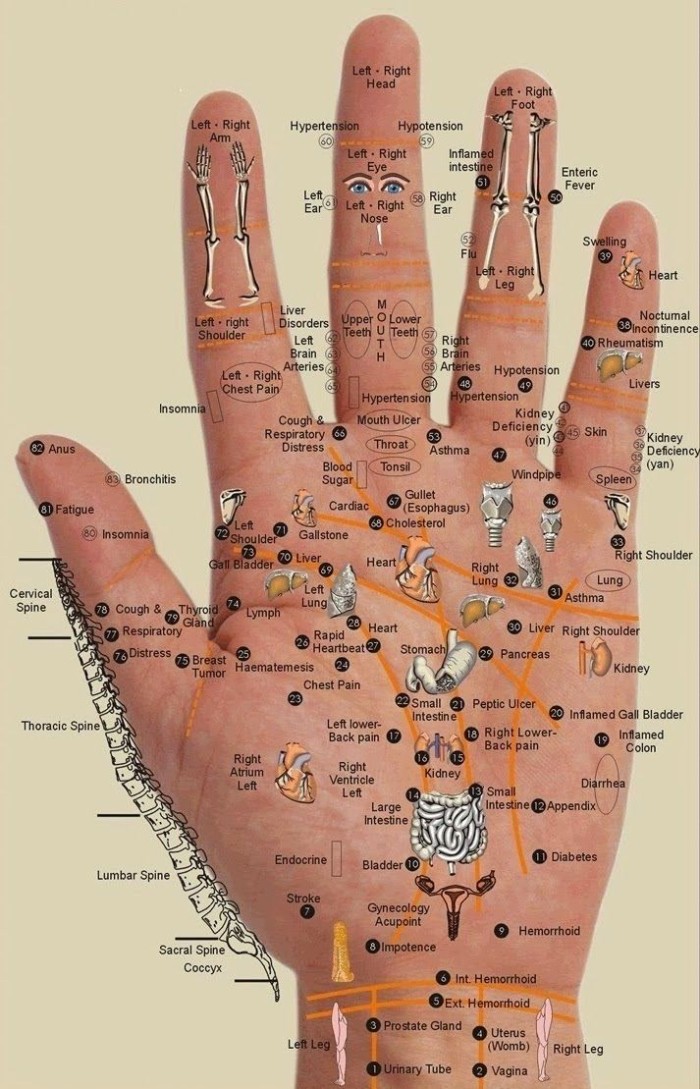
Hand Pressure Points – Every Body Part Is In The Palm Of Your Hand

Western medicine has not yet satisfactorily addressed chronic pain or discomfort in varying parts of our body. Alternative medicine can often be light-years ahead when it comes to relieving pain.

Although a combination of both western and alternative medicine, is probably the most sensible route overall, it is worth looking at the benefits of an alternative form of pain resolution, such as reflexology.


The principles of reflexology have led to the idea of finding the pressure points within the palm of your hand that are connected to the part of the body causing you pain. By pressing the thumb point into the corresponding part of the hand for 5 seconds, releasing for 3 seconds, pressing again and repeating this cycle for several minutes, several times a day you will get results. This methodology as well as others are demonstrated in this video.

In the video you are about to watch, Dr. Oz’s guest is a reflexologist who explains that both the hands and feet can be seen as a microcosm of our entire body. Five audience members come to the stage to explain what part of their body is causing them chronic discomfort or pain. For each malady, the reflexologist explains which part of the palm is connected to the body part involved. She then demonstrates how using one hand, different forms of pressing or massaging of a particular part of the palm of the other hand will, over time, alleviate the pain experienced.

The audience members in this video suffered from: (1) Constipation and bloating (2) Insomnia and exhaustion (3) Sinus congestion (4) Upper back pain (5) Low libido. The reflexologist showed them how to work on their own palms to alleviate their pain or problem. She explained what sensations they would experience as they applied pressure and massage, that would signal that they were working in the correct area. Her explanations were fascinating and easy to follow.


After watching this I will try a few of the methods demonstrated for things that I need relief from. Let us know what you think about reflexology after watching the video. Have you ever tried it and had success? Will you give it a try?

September 10, 2015


20 Amazing Health Benefits of Okra

Okra WonderOne of the best therapeutic vegetables is known as Okra. After you read this article, we are certain that you will begin utilizing Okra as a part of your every day diet.

What is Okra?
This therapeutic vegetable is grown all throughout the tropical and warm mild districts around the globe for its stringy fruits or “pods”. Okra can be consumed as a vegetable.  Okra aka “Lady’s finger” is in with the Malvaceae (mallows) family and is named deductively as Abelmoschus esculentus.

Why should you incorporate Okra in your eating regimen?

These are the medical advantages of Okra:

Brings Down Bad Cholesterol: Okra (soluble fiber pectin) helps lower the serum (bad) cholesterol and avoids atherosclerosis.

For Pregnancy and Fetal advancement: Okra helps prevent unnatural birth cycles, promotes development of the fetal neural tube, and prevents imperfections in the tube.

Skin Detoxifier: Okra (Vitamin C, fiber aids toxic) is utilized to repair body tissues, heal psoriasis, eliminate pimples, and other skin conditions.

Treats Genital Disorders: Okra treats genital issue like syphilis, extreme menstrual bleeding, leucorrhoea, dysuria, and gonorrhea.

For Asthma: It can shorten the duration of asthma manifestations and prevent deadly attacks.  Okra is high in vitamin C, has anti-inflammatory and antioxidant properties.

Reduces Colon cancer risk: Okra cleans out the intestinal tract with its insoluble fiber, diminishing the danger of colon-rectal tumor. The high cell reinforcements in Okra aid in securing the immune system against unsafe free radicals and avoid transformation of cells.

Immunity Booster: Okra is a decent immune booster food high in antioxidants and vitamin C. Other vital minerals like calcium, iron, magnesium, manganese, battle against unsafe free radicals and support the immune system.

Rich Fiber Source: Okra helps regulate digestion, and regularization of entrails with its filaments.

Rich Protein Source: The superb wellspring of top notch vegetable protein and oils, cystine, advanced with amino acids like tryptophan, and other sulfur amino acids content are contained in the seeds of Okra.

Lively Hair: Okra is an extraordinary hair conditioner, battles dandruff and lice, scalp cream for dry and irritated scalp and adds a youthful sheen to your hair.

Treats Sun strokes: Okra eases general misery, weakness, and fatigue.

Relieves Constipation: the mucilaginous and rich fiber content in Okra cases helps enhance stool mass, binds poisons, guarantees simple solid discharges, encourages fitting assimilation of water, and lubricates the intestines with its common purgative properties.

Probiotics: Okra facilitates the propagation of probiotics and helps the natural production of vitamin B complex.

Diabetes: Okra regulates glucose levels. The kind of fiber found in Okra i.e. Eugenol, aids in settling glucose by controlling the rate at which sugar is ingested from the intestinal tract. Learn how to make okra water in the video below.

Feeds Blood Network: Okra helps build the structure of blood vessels.

Respiratory soother: The antioxidants in okra along with a large content of vitamin C are effective in treating respiratory problems and has shown to reduce the frequency of asthma attacks in patients.

Counteracts Anemia: Helps red blood cell production.

Prevents Obesity: the Okra’s fiber helps in keeping you full, and the copious supplements sustain you.

Ulcers: The same mucilage in okra which helps ease digestion can also heal and relieve the pain of stomach ulcers.

Strong Bones: Okra is an excellent source of vitamin K which is vital for reinforcing bones and counteracting osteoporosis.


How To Make Okra Water:

How To Grow Okra From Seed:

Sources:

http://www.healthyfoodteam.com/

http://www.curejoy.com/

8 Health Warnings Your Fingernails May Be Sending

vertical-ridges-fingernails-nail-plate-anatomy

Fingernails and disease don’t go together in most minds… but they should. Your fingernails can give you valuable health warnings and signal the presence of serious disease.


Take a good long look at your nails. Hold a hand level with your nose about a foot out from your face and scrutinize each one.

Look at the curves, dips, ridges, and grooves. Check out how thick or thin they are and if your nails are chipped or broken. Make a note of the color of the nail itself, the skin under it, and the skin around the nail.


Check your memory – have your nails always looked like this? Changes to your fingernails and disease onset are linked, so note any new developments. With this fresh view, compare what you see with this list of eight potential fingernail health warnings.


vertical-ridges-fingernails-normal

 1. Discolored nails

A healthy fingernail should be pink with a touch of pinkish white (moons) near the base. If your nails are a dull color or streaked with other colors, you may have a serious hidden health problem.

    • -Green nails are a sign of bacterial infection
    • -Red streaks in your nail bed are a warning of a heart valve infection
    • -Blueish nails signal low oxygen levels in your blood
    • -Dull nails mean a vitamin deficiency
    • -White nails may signal liver disease, such as hepatitis
    • -Dark stripes at the top (Terry’s nails) are associated with aging and congestive heart failure


Scrub those nails clean and really look at your nail color! Given the “rainbow” of potential health challenges, you want to be sure you see what your fingers are saying.


2. Thick nails

Thick nails are not natural. You want your nails to be strong, but if they resemble talons or claws more than traditional nails watch out!

    • -Thickened nails that are otherwise normal can signal lung disease
    • -Thick and rough-textured nails can signal a fungal infection
    • -Thick and separated nails may mean thyroid disease or psoriasis
    • -Unusual thickness may also be a symptom of a circulation problem


Thickening nails are a change that should tune you in to other health symptoms you may be ignoring. Also watch out for allergic reactions to new medications which can show up as suddenly thick nails!


3. Split nails

Split nails aren’t just occasionally chipped or shut in doors. Instead, these nails seem to flake away in layers. Don’t blame frequent handwashing or nail polish for everything, especially since:

    • -Split nails result from folic acid, Vitamin C, and protein deficiencies
    • -Split nails combined with a pitted nail bed (base) can signal psoriasis, which begins in nails 10% of the time according to WebMD
    • -Split nails may result from chronic malnutrition


Watch what you eat and check the psoriasis connection to fight back and pay more attention to your health overall.

4.Concave (Spoon) nails

Spoon fingernails signal a number of internal issues. To be considered full spoons, nails will be soft and curve up, forming a dip that is often big enough to hold water. Spoon nails signal:

    • -Iron deficiency (usually from anemia)
    • -Hemachromatosis, a liver disorder – your body absorbs too much iron
    • -Heart disease
    • -Hypothyroidism


Your fingernail and health challenges go hand in hand – for many people, clearing up their health issue results in their spoon nails returning back to normal.


5. Pitted nails

Small dips or holes in your nails can be a result of banging up your hands – or they could be a sign that you need to look more closely at your health. Nail pitting can signal:

    • -Psoriasis
    • -Connective tissue disorder
    • -Alopecia areata, an autoimmune disorder that causes hair loss
    • -Zinc deficiency (when the pit seems to form a line across the middle of your nail)


Watch your hand to separate natural dents and dings from real, lasting pits. The first will clear up quickly, but pits linked to disease linger.

vertical-ridges-fingernails-diseases-1

6. Ridges

Nails should have smooth surfaces with almost imperceptible lines. Obvious ridge lines are a signal that something is up with your body. Some of the most common conditions associated with heavy ridge lines are:

    • -Iron deficiency
    • -Inflammatory arthritis
    • -Lupus (for red lines at the base of your nails)


Don’t just buff away your ridges – hear their warning!


7. Dry, brittle nails

You don’t need lotion or cuticle oil. If your nails are dry and brittle, you should check your hormone levels and bacterial health.

    • -Thyroid disease leads to brittle, dry fingernails that crack and split easily
    • -Fungus can make nails dry or even crumbly, affecting 12% of all Americans according to the American Academy of Dermatology


Both thyroid and fungal issues take time to treat, so you won’t see a difference in the look of your fingernails for a full growth cycle.


8. Clubbed nails

If you have plump skin that seems to swell around the nail, or if your nails seem to have puffed around your fingers, they are said to be “clubbed”. Clubbed nails can mean:

    • -Lung disease, especially if you already have trouble breathing
    • -Inflammatory bowel disease
    • -Liver disease
    • -AIDS


Your fingernails won’t be the only signs of these diseases, but they can provide confirmation or motivation to seek medical care.


Don’t ignore your hands or the health warnings they send. Fingernails and disease are more closely related than you think – check your nails often to protect your health!

by JESSE CANNONE


References

Trimarchi, M. Top 5 Things Your Nails Say About Your Health. Discovery Health.

Mayo Clinic. Slide Show: 7 Fingernail Problems Not to Ignore. 2011 Dec 8.

Rauh, S. Healthy Fingernails: Clues About Your Health. WebMD.

Danoff, R. Can Fingernails Indicate a Health Problem? MSN Health.

How to Combine Foods for Optimal Health


proper-food-combining-chart

By Dr. Mercola

Dr. Wayne Pickering is a naturopathic physician on the East Coast of Florida, and was a good friend of fitness legend Jack Lalanne. He gave a beautiful eulogy at Jack’s funeral. At the age of 67, he swims several miles a week in addition to extensive biking and a wide variety of calisthenics, pushups and pull ups.

He has quite an impressive exercise regimen and is a personal inspiration to me as I hope to be in as good a shape as he as that age. He also has one of the most positive attitudes of anyone I know.

He eats plenty of fruit and caused me to seriously reevaluate my position on consuming fruits and I have gradually been increasing my intake of them, especially mangoes, which is his pseudonym (Mango Man). He even has a variety of mangoes named after him. I actually have two of the Pickering mangoes growing in my yard.

But one of the things he’s known for in the nutrition world is food combining—and he is truly like a walking billboard for his program. The man looks about 20-30 years younger than his calendar age.

“Age is not a matter of years; it’s a matter of condition. You can keep your health up until you die because you have 75 to 90 trillion cells in your body that work symbiotically on your behalf striving towards health. You cut yourself? It’s going to heal without a thought. It just does,” he says.

Improper food combining is one of the primary factors that cause gas, flatulence, heartburn, and upset stomach. What’s worse, poor digestion can also contribute to malnutrition, even if you think you’re eating a decent diet.

In his youth, Dr. Pickering was no different from most Americans today—severely overweight, out of shape, and eating the wrong foods. He recalls the key moment that turned his life around:

“I was in Illinois when I came back from Vietnam. I stayed up there for a year in Rockford. A little lady found me one day in a distraught situation. She owned a health food store. I went in there, and I bought a bottle of vitamins and a little book, How to Be Healthy with Natural Foods, by Edward E. Marsh.”

He also found a postcard-sized food combining chart. He’d had frequent stomach pains for years, and was absolutely shocked when 24-hours after putting the information into practice, he didn’t suffer with indigestion anymore.

Since then, Dr. Pickering has become an avid teacher of natural health, in which health and longevity is the natural outgrowth of proper nutrition—which also encompasses proper food combining, to optimize digestion.

ashton-foodcombiningrules

Three Principles of Health


Many are under the mistaken belief that the human body is a frail instrument, prone to disease and pre-programmed to decay. Dr. Pickering wholeheartedly disagrees, and I second that motion. The truth is, your body is infinitely wise, with a natural inborn “instinct” toward health, and by following certain natural principles, you allow your body to do what it does best, which is to maintain an equilibrium of health. Dr. Pickering’s three basic principles of health are:

  1. You are automatically healthy, by design, and sick only by default
  2. You don’t catch disease; you “earn” it, as it stems from “crud in the blood from being drunk with junk,” as he says
  3. You get well by what comes out of you, not by what goes into you

In essence, health is as much based on getting rid of toxins and other harmful substances as it is based on optimizing your nutrition. Part and parcel of this philosophy is that food is your number one ally. And while certain nutritional supplements can be beneficial, they will not allow you to circumvent a poor diet. They can only complement your diet; they cannot take the place of a meal.

“Nutrition doesn’t heal. It doesn’t cure. It doesn’t do anything,” Dr. Pickering says. “It’s a science though and it never changes... Here’s what nutrition is: it’s a series of four processes that your body employs to make food materials for the body to use.”

Those four processes are the following:

  1. Digestion
  2. Absorption
  3. Assimilation
  4. Elimination

Four Principles of Wholesome Nutrition

According to Dr. Pickering, one of the most important factors when it comes to healthful eating is to make sure you’re eating foods that are in season. Your constitution changes with the seasons of your local climate, and eating local foods when they’re in season is a natural way to harness that intrinsic relationship your body has with the Earth.

Seasonal foods will typically be at their cheapest when they’re in season, and will be readily available in most stores and farmers markets. Dr. Pickering’s food combining guide1 can also help you determine which foods are in season, in addition to how to combine them for optimal health.

Next, Dr. Pickering advises eating foods that are indigenous to your area. Eskimos, for example, are not going to reap the same nutritional rewards from watermelon as someone living in the American South where watermelons grow naturally. The climate itself makes nutritional demands on your body.

Third, you also want to select foods according to the type and amount of physical activity you’re involved in (an office worker, for example, will not benefit from the diet of a triathlete), and lastly, you want to choose foods according to your body’s digestive chemistry. As a side note, albeit an important one, Dr. Pickering also points out the importance of your thoughts.

“Your thoughts, you see, help to govern chemistry,” he explains. “When you sit down to eat, it’s crucial to not talk about problems at the dinner table; talk about joyous things just because it gives you a chance to get together [with each other].”

Recent research has even confirmed that if you want to make your food taste better, and more thoroughly enjoy the experience of a meal, perform a ritual first. One of the most rewarding rituals you can do before a meal is to stop and give thanks for your food.

Not only might this make your food taste better, but also people who are thankful for what they have are better able to cope with stress, have more positive emotions, and are better able to reach their goals. People who give thanks before they eat also tend to eat more slowly and savor the meal more so than those who do not, lending a natural transition to mindful eating, which has a direct and beneficial impact on digestion.

8-food-combining-chart

Why Food Combining Matters

Wayne is probably best known for promoting the importance of food combining. If the food you eat is not digesting properly, not only can painful gas, heart burn, acid reflux and other stomach problems arise, but your body will also be deprived of critical nutrients.

The short definition of digestion is: you put food or liquid into your mouth, swallow it, and then your body breaks these molecules down into a size it can absorb. What your body doesn’t use is excreted as waste. These are the four processes listed above—digestion, absorption, assimilation and elimination. But food is actually broken down in a number of different areas, including in your mouth, stomach, and the first and middle sections of your small intestine, called the duodenum and jejunum respectively. Furthermore, you have two kinds of digestion:

  1. Mechanical (chewing and churning) digestion
  2. Chemical digestion

Food combination takes into account the area and complexity of digestion of each food, to ensure it goes through your entire digestive system with ease. Dr. Pickering explains:

“There’s only one food that chemically breaks down in the stomach and that’s protein. Proteins require pepsin, a very highly acidic [enzyme] in conjunction with hydrochloric acid. But the hydrochloric acid doesn’t have the ability to break the food down. It just sets the medium for the concentration of the amount of pepsin that’s poured into the stomach to digest whatever food that’s in there. The intelligence of this human body is phenomenal.”

There are three primary categories of food: proteins, carbohydrates, and fats. Proteins, again, begin their digestion chemically in your stomach. Carbohydrates are divided into two categories: fruits and starches. While fruits pass through your digestive system with relative ease, starches require three levels of breakdown; the very first stage is in your mouth. That’s why it’s crucial to carefully chew starchy foods.

According to the rules of food combination, you do not want to mix proteins and starches in the same meal. This means, no bun with your hamburger, no meatballs if you have pasta, no potatoes with your meat… Why is that? Dr. Pickering explains:

“Starches require an alkaline digestive medium to digest. If you put your fist in your stomach while it’s digesting steaks and all that, chances are, you wouldn’t have a hand anymore. The acid is intense… When you mix them both together – an acid-type of food and an alkaline – basic chemistry shows that they don’t digest. They neutralize. Then what happens? If the food is not digesting… it’s going through your body [undigested], throwing it into all kinds of turmoil.”

Related Article: What Happens to your body when you eat Meat & Potatoes Together

The Three Commandments of Food Combination

Dr. Pickering lays out three basic commandments of eating that he recommends you not deviate from:

    1. No proteins and starches at the same meal, as they neutralize each other and prevent proper digestion of either food. To ensure proper digestion of each food, wait two hours after eating a starch before eating protein. And wait three hours after eating protein before eating a starch.
    2. No fruits and vegetables at the same meal. Fruits are either a single or double sugar, whereas the starches are a triple sugar. Fruits mechanically break down in your stomach, but chemically, they don’t break down until they reach the third and fourth stage of your digestive system, which are in your small intestine. Starches, again, are broken down in three different stages, starting in your mouth.

According to Dr. Pickering, this is also why it’s crucial to not eat dessert after a meal. When you do, it gets trapped in your stomach with all that other food, where it starts to rot as it’s not being chemically digested there. Therefore, eat fruit 30-60 minutes before dinner. The same applies if you want to eat another piece of fruit. Acidic fruits, such as lemons for example, also do not combine well with starches. Lemon and banana is but one example of a combination that is sure to lead to gastrointestinal upset…

Many people consider tomatoes a fruit, yet it’s commonly added to salad. Dr. Pickering classifies tomatoes as a “fruit-vegetable,” because even though they don’t have the sugar like most fruits, they’re still an acidic fruit-vegetable. As such they’re okay to combine with other vegetables. He suggests the following recipe for an excellent salad:

“Any kind of vegetable that has seed in it; for example summer squash, zucchini, eggplant, cucumbers, bell peppers, and okra—those are all fruit-vegetables. Your tomatoes go well with those. And since lettuce and celery have a neutral effect, as far as the breakdown of food, the celery and the lettuce combine very well with all of that. You can also add avocados.”

  1. “Eat melon alone, or leave it alone, or your stomach will moan.” In short, melons do not digest well with other foods and will frequently cause problems unless consumed by itself.

The When and What of Eating

According to Dr. Pickering, the amount and sequencing of the foods you eat can also make a difference. He recommends the following eating schedule:

  • Morning meal: The least concentrated foods, in the greatest amount. Ideal food choice: fruits
  • Middle of the day: More complex foods, but in a smaller amount than your first meal. Ideal food choice: starchy carbs
  • Evening: The most concentrated foods, but in the least abundant amount. Ideal food choice: protein

What Happens to Your Body When You Eat Meat and Potatoes Together


steak potatoes

Do you eat your meat and potatoes together at the same meal? If you’re a vegetarian that answer is obviously a resounding “no,” but for millions of people it’s something they’ve probably never even thought twice about.

“He’s a meat and potatoes kind of guy” is of course a common phrase and just one example of how eating these two favorite foods together has become ingrained in our DNA.

It’s a practice that hasn’t been questioned much, but the truth is that eating meat and starches like potatoes together could be doing serious harm to your body’s systems.

Should you really abandon your favorite Sunday meal of meat and potatoes? If you truly care about your health then the evidence is pretty clear.

The Problem With “Meat and Potatoes”

The science of food combining is not well known, but many naturopathic doctors have discovered some surprising patterns and rules for better health.

One of the biggest no-no’s is actually combining meat such as steak with high starch carbohydrates such as potatoes, or even buns with your hamburgers.

Dr. Wayne Pickering, a longtime friend of fitness legend Jack Lalanne, tells us why in this article.

“Starches require an alkaline digestive medium to digest,” he notes. But meat such as steaks require heavy acids to digest. “If you put your fist in your stomach while it’s digesting steaks and all that, chances are, you wouldn’t have a hand anymore. The acid is intense…”

When you mix meat and starches together in the same meal, Dr. Pickering says, your body chemistry does not allow them to mix at all.

“They neutralize…Then what happens? If the food is not digesting… it’s going through your body (undigested), throwing it into all kinds of turmoil.”

That type of turmoil can consist of: heartburn, discomforting gas, acid reflux, serious digestive issues and much more. To make matters worse, your body will be deprived of key nutrients from the food you just ate.

One Doctor’s Incredible Personal Story 

Cutting out the meat and potatoes (or just bread and meat) together is one highly effective way that Dr. William Howard Hay, founder of the Hay Diet, was able to recover his health, and lose a ton of weight for that matter.

Dr. William Hay

He had weighed 225 pounds and suffered from all sorts of medical conditions including a dilated heart, which he found out about while attempting to catch a fast-moving train.

Using the simple plan of not eating proteins such as meat with starches, he began to treat himself and lost 50 pounds in about three months while recovering from his life-threatening heart condition.

Dr. Hay then went on to create the Hay Diet (this book from Doris Grant has a good rundown) and the rest is history.

Suffice it to say if you’ve noticed any of the symptoms above or had any health problems similar to Dr. Hay’s, it may be time to stop eating your meat and potatoes together and see what kind of differences you notice.

Health is complex, but at the end of the day this one simple change really could save your health, not to mention your life.

by | July 9, 2015

5 Reasons The Most Dangerous Drug Is Not Illegal

alcohol-5-reasons
 

Marco Torres

Hundreds of millions of people indulge in one of the most dangerous drugs which is sold right over the counter. When it comes to harm done to other people and the users themselves, not heroin, crack cocaine, methamphetamines, marijuana or even tobacco come close to the health and safety hazards caused by this one depressant.

Drug harms fall into two broad categories: those that affect you, and those that affect others. The personal ones include death, health problems (including mental health), accidents, addiction, relationship breakdown and legal trouble. Harms to other people include violence, financial problems, crime and environmental damage — both at home and where the drugs are produced.

One rule of thumb is that risks become more serious with repeated use. Take addiction, for example. According to the US National Institute on Drug Abuse, it can take only “a few” uses of a drug to become addicted to it, although the potential for addiction varies between drugs and people. What’s interesting is that cannabis is one of the most demonized “drugs” yet there is no evidence of it’s addictive nature in human beings.

Perhaps the best guide to the harm comes from the UK’s Independent Scientific Committee on Drugs (ISCD), which analysed 20 drugs on 16 criteria. It found the most harmful illicit drug to be heroin, with an overall rating of 55 out of 100, with crack cocaine on 54 (see diagram). LSD and magic mushrooms are among the least harmful, and also carry the lowest risk of dependence.

Another rule of thumb is that mixing drugs amplifies the risks. Taking cocaine with ecstasy or amphetamines, for example, raises the risk of acute toxicity over and above the sum of their parts.

Many factors determine whether you’ll become addicted to a drug: your genetic makeup, social history, the drugs your friends take, how much money you make. But the chemical makeup of drugs guarantee that certain drugs are more addictive than others.

30233701-addictive

5 Reasons Alcohol is Legal


1. IT’S HEALTH RELATED COSTS ARE HIGHER
Health-related costs for alcohol consumers are eight times greater than those for cannabis consumers, according to an assessment recently published in the British Columbia Mental Health and Addictions Journal. More specifically, the annual cost of alcohol consumption is $165 per user, compared to just $20 per user for cannabis. This should not come as a surprise given the vast amount of research that shows alcohol poses far more — and more significant — health problems than any other drug and most drugs combined. There results in more medication, therapy and medical expenses which the health system profits handsomely from.

2. DEATH IS A GREAT BUSINESS
The official publication of the Scientific Research Society, American Scientistreported that alcohol is one of the most toxic drugs and using just 10 times what one would use to get the desired effect could lead to death. According to the CDC, hundreds of alcohol overdose deaths occur in the United States each year. Again this leads to increased revenues and funding at the expense of lives.

3. CANCER CLINICS ARE MAKING A KILLING
Alcohol use is associated with a wide variety of cancers, including cancers of the esophagus, stomach, colon, lungs, pancreas, liver and prostate. Researchers from the Boston University School of Medicine (BUSM) and Boston University School of Public Health (BUSPH) have shown that alcohol is a major contributor to cancer and drinking even small amounts of alcohol, as little as one drink, can increase the risk of developing cancer. Alcohol, regardless of its type (i.e. beer, wine, liquor, etc) is a class A1 carcinogen which are confirmed human carcinogens. Alcohol consumption has been causally related with breast cancer for some time. Increasing evidence indicates a stronger association with neoplasms, though the risk is elevated for other types of breast cancers too.

4. IT’S ADDICTIVE NATURE FUELS OTHER ADDICTIVE BEHAVIORS WHICH FUEL THE ECONOMY
Alcohol use can result in significant and potentially fatal physical withdrawal. Those who use alcohol are also much more likely to develop dependence and build tolerance. Because alcohol is legal and often consumed in social settings, alcohol addiction is complicated. But as an addictive agent, it’s remarkably simple–and effective. Alcohol’s withdrawal syndrome is so severe that it can cause death, and its effects on the brain’s reward system cause well-documented and intense craving in heavy drinkers. Alcohol is proven to exacerabate other addictive tendencies such as gambling, smoking, overeating, other drugs and many other physical and psychological dependencies which drive economies worldwide. Research published in the journal Alcoholism: Clinical & Experimental Research, found that 36 percent of hospitalized assaults and 21 percent of all injuries are attributable to alcohol use by the injured person which alone increases overall revenue of hospitals, clinics and many different health professionals.

5. IT CREATES ABUSERS AND PUTS MORE PEOPLE IN PRISON
Once again, it’s a business. Alcohol is a major contributing factor in the prevalence of domestic violence and sexual assault. This is not to say that alcohol causes these problems; rather, its use makes it more likely that an individual prone to such behavior will act on it. For example, a study conducted by the Research Institute on Addictions found that among individuals who were chronic partner abusers, the use of alcohol was associated with significant increases in the daily likelihood of male-to-female physical aggression. Specifically, the odds of abuse were eight times higher on days when men were drinking; the odds of severe abuse were 11 times higher. According to the Rape, Abuse and Incest National Network (RAINN) website highlights alcohol as the “most commonly used chemical in crimes of sexual assault” and provides information on an array of other drugs that have been linked to sexual violence. This one drug alone is estimated for at least 12% of all incarcerations.

By Marco Torres – June 04 2015

About the Author

Marco Torres is a research specialist, writer and consumer advocate for healthy lifestyles. He holds degrees in Public Health and Environmental Science and is a professional speaker on topics such as disease prevention, environmental toxins and health policy.

Sources:
nytimes.com
columbia.edu
rt.com
newscientist.com
csun.edu
drinkaware.co.uk

15 Health Conditions Helped By Drinking Lemon Water In the Morning

lemon-drink

1. Helps Heal Acne

Consuming lemon water, helps metabolize the acidic temperament of the body alleviating and preventing acne breakouts.
You can also rub the juiced lemons on your face to help with acne.


2. Appetite Suppression and Weight Loss

The vitamins and enzymes in lemons help regulate blood sugar in order to maintain normal weight levels.  Pectin fiber helps fight hunger cravings. Lemon juice is also a digestive aid. It encourages the production of bile, which is what breaks down food during digestion.

3. Flushes Out Kidney Stones

Potassium in lemons helps increase citrate levels in the urine to prevent oxalate from forming.


4. Boosts your immune system

Lemon water is a great support to the lymphatic system, which works in conjunction with your immune system to trap and eliminate pathogens.


5. Gall Bladder Pain

Drinking lemon water while eating has helped some deal with painful gall bladder stones.


6. Cold and Flu Remedy

Lemons are high in vitamin C, a natural antioxidant that enhances the immune system and has antiviral and antibacterial properties.


7. GERD (Gastroesophageal Reflux Disease)

One reader used to go through TUMS like candy and since drinking lemon water, two weeks later, she hasn’t needed them.


8. Harder Finger Nails

Several people mention they feel lemon water has increased the hardness of nails and cleared up white spots seen on them.


9. Fights Off Food-Borne Illnesses

This might be handy while traveling. Drink lemon water to avoid food poisoning.

10. Helps Deal With Fibromyalgia

A combination of lemon water and yoga stretches helps a reader deal with exhaustion due to fibromyalgia.

11. Reduces Inflammation

Lemons have anti-inflammatory properties. They also help neutralize acidity which is the main cause of tissue inflammation.


12. Relieves Sore Muscles After Exercise

Have a hard workout? Squeeze a lemon into a glass of water and feel the pain ease.


13. Reduces Joint Swelling And Pain

Lemon water can help reduce uric acid in our joints, which is one of the main causes of inflammation, especially as related to arthritis.
One reader suffered a compressed vertebrae and the doctors were surprised that she was in less pain than is normal–she credits drinking lemon water.


14. Reduces Alcohol Cravings

Whether you’re in recovery or just cutting back, one reader reports success by drinking lemon water at parties to help kick a craving for alcohol.


15. Helps With Colitis

Colitis is an imbalance of acid/alkaline levels in the body so it’s no wonder that lemons can help with this. Drinking a glass of lemon water a day is a great way to bring your pH levels back into balance and reduce acidity.

Source: Living Traditionally

Chinese Face Map Reveals What Your Body Fights With!

When problems begin to appear on our skin, it is usually a symptom of a problem we are having within the body.According to Chinese medicine, different parts of the face represent different organs of our body, when something is wrong within the body it will manifest itself on the face.Forehead: bladder and small intestine
Cause: Too many unhealthy foods, alcohol abuse, sleep deprivation and sugar cause slow digestion or stress.

Cure: Raw foods, lots of water, abstaining from alcohol, sugar in moderation and good sleep.


Between the eyebrows: liver
Cause: Your stomach is not getting sufficient rest or you are eating too much meat and might also be allergic to some ingredients (bear in mind the high amount of antibiotics animals are fed today).

Cure: Healthy and fresh foods, exercising, aerobic activity, getting outdoors to get some fresh air and meditation.


Eyebrow arch: kidneys
Cause: cigarette and alcohol abuse and lack of exercise.

Cure: A lot of clean water, avoid caffeine, sweetened drinks and alcohol.


Nose: heart
Cause: Not enough clean air and poor blood circulation or high blood pressure.

Cure: Check your blood pressure, follow the cholesterol level. Organic green tea can help you get rid the toxins. Start some form of physical exercise.


Upper part of the cheeks: lungs
Cause: Not enough clean air or cigarette abuse.

Cure: Physical training, jogging outside in a clean environment would be best.


Cheeks: lungs and kidneys
Cause: Excessive smoking, stress, sleep deprivation and bad diet.

Cure: Start a healthy diet that consists largely of fresh vegetables, drink lots of water and get some rest.


Mouth and chin: stomach
Cause: Poor diet or excessive caffeine and alcohol use.

Cure: Start a healthy diet that consists largely of fresh vegetables, drink lots of water and get some rest.


Jaw and neck: hormones
Cause: Dehydration.

Cure: Drink more water.


As you can see, smoking cigarettes, alcohol and caffeine abuse, along with poor diet, stress and lack of exercise are major problems, by changing these things around you can dramatically improve the quality of your life. If problems do persist though, it is recommended to go see a doctor.