Category: Myths

3 Mistakes Everyone Makes While Eating That Cause Indigestion, Bloating and Acid Reflux

bloating and indigestion

We’ve all been there. One hand is clutching your stomach while your other hand is leaning forward and reaching for that last piece of chicken. You know you’re full, but everything is so damn delicious. Anyway, you worked out yesterday so it’s okay. Or was it last week? Doesn’t matter, this chicken is filling that caloric deficit right now, so it’s all even.

The food coma is something we all experience now and again, but if you’re experiencing it every time you go out to a restaurant or every weekend, then something’s got to change. It’s not normal to feel sleepy, sluggish and bloated after every meal. You know this and I know this, 90% of the time the culprit is simply overeating.

But what about when it’s not? What if you’re eating healthy, not overeating and yet you still feel sluggish and bloated afterwards? That’s where digestion comes in. Unfortunately most of us aren’t even aware that the eating habits we’ve developed as a society are causing us to feel this way.

Here are the top 3 unhealthy habits I recommend avoiding at your next meal:

Drinking lots of water with your meal

Feeling confused already? A nutritionist telling you NOT to drink water? Hear me out. Water is wonderful. And it’s great to have with your meal in small sips, for the purpose of helping the food along the digestive tract. But drowning your meals with multiple glasses of water is just going to give you indigestion and make you feel bloated afterwards.When food enters your stomach, a substance called hydrochloric acid (HCL) is secreted from the stomach lining to help begin the process of digestion. HCL is super acidic — after all, it needs to be in order to break big chunks of food into tiny, absorbable nutrients. So if you start chugging back water with your meal, you’re going to dilute the hydrochloric acid and thereby dampen (pun intended) its efforts.

If it helps to paint a picture, imagine a pool of water in your stomach with bits of food floating around, the acid just kind of fizzing out trying to do its job. Feeling gross and bloated already? Good, don’t do it!

Solution:

Drink lots of water either an hour before or after your meals. Only sip on a glass of water throughout your meal.

Eating lots of starch and protein together

Steak and mashed potato. Burger and fries. Eggs Benedict. All the glorious combinations that make us want to pass out on the couch after. Eating large amounts of starch (e.g. bread, pasta, rice, potatoes) and protein (e.g. fish, chicken, beef, eggs) at the same time can cause indigestion and acid reflux.

This is because protein has a much slower rate of digestion, and starches digest much faster into simple sugars. Technically speaking, starches should be saying “hasta la vista” to the stomach pretty quickly and entering the next stage of digestion in the small intestine. But because they’re all mushed up with the protein in the stomach, they have to hang around and wait for hours until the protein finishes digesting too.

And when starches hang around too long, they ferment i.e. release gas which causes us to belch every so eloquently.

Solution:

Eat your starch first, follow it up with protein afterwards. Don’t sweat it if you’re having a small portion of starch alongside your protein, the key is not to overdo the rice and potatoes. P.S. you can eat your veggies with starch and protein, either combo works well!

Having ice-cold water with your meal

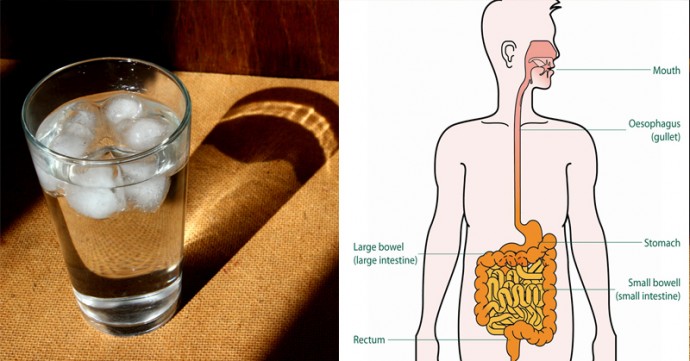
Yep, I’m back to talking about water again. And here you thought all there was to water was drinking it. Nay friend. When it comes to temperature of drinking water at a meal, opt for room temperature instead of cold. Ice-cold water constricts blood vessels, so it hinders the body’s ability to digest food and absorb nutrients.

Ice-cold water will also solidify any fats that are being eaten making them difficult to digest as well. Plus, your body’s energy is going to get diverted from trying to digest food to trying to regulate your body’s temperature. So much unnecessary exhaustion.

Solution:

Think Japanese. Order some hot water (with lemon, optional) or green tea before the start of your meal and slowly sip on it to prime your gut for optimal digestion. Always tell the server “no ice” and “room temperature”.

Keep in mind that these tips are for optimal digestion. If you suffer from weak digestion, these are far more applicable to you than someone who rarely suffers from feeling bloated or sluggish after a meal. These tips are also more crucial when you have a big brunch or celebratory meal coming up  — basically, when you know a food coma is just around the corner.

Uncovering 5 Cannabis Misconceptions

Harvesting Cannabis

We have to admit, it makes sense why many people misunderstand cannabis and the benefits it holds for both individuals and society. Cannabis, after all, has been fraught with decades of misguided stereotypes, scare tactics, and inaccurate information masquerading as facts. Our legal system and anti-drug policies make it even harder to debunk these outlandish myths, as they themselves encourage misuse, perpetuate stereotypes, and spread fear-based messaging and biased conclusions, leaving society uninformed and struggling to separate the truths from the lies.

Exposing these false messages through research and awareness is our best bet at eliminating the misconceptions surrounding cannabis. Here are five misleading anti-cannabis sentiments we’ve all probably heard at some point or another. For each of these points, we state the facts and logic to debunk the arguments so you can decide on your own what to believe.


1. “Cannabis is a gateway drug.”

Heroin use

This myth has persisted despite being debunked on numerous occasions. It shouldn’t be surprising that people who consume harder, more illicit drugs have potentially consumed cannabis as well. We can say the same for alcohol and tobacco, yet, we don’t consider them a gateway to drug abuse because it’s foolish to associate a correlation as a cause.

The missing logic from the gateway argument unfolds even further when you look to its larger social implications. In a post on Psychology Today, Constance Scharff, Ph.D, points to alcohol and tobacco as the more sensible ‘gateway’ drugs:

“Many people mistakenly believe that marijuana use precedes rather than follows initiation of other illicit drug use. In fact, most drug use begins with alcohol and nicotine before marijuana, making nicotine and alcohol the two most common drugs of abuse.”

Aside from the confusing differentiation of cannabis, alcohol, and tobacco, Dr. Karen Van Gundy, Associate Professor of Sociology at the University of New Hampshire, recently completed a study on cannabis showing other factors of causation hidden in the gateway myth:

“But pot does serve as a ‘gateway’. Mainly for young people who are poor, unemployed and subjected to severe psychological stress.”

Larger social issues are at play here, so claiming that cannabis is a gateway drug is ignoring the numerous and complex factors, from environmental to psychological, that account for why heavy drug users turn to a variety of substances.


2. “Marijuana is worse for your lungs than tobacco.”

Cigarettes

Hats off to the tobacco corporations who’ve successfully perpetuated the idea that smoking cannabis is more harmful to your lungs than cigarette smoke — a crux of capitalism rather than science. No matter the projected rationale behind these arguments, whether it’s harping on the lack of filters or claiming that you inhale longer with marijuana, no study proves marijuana to contain more harmful effects than tobacco.

The Journal of the American Medical Association (JAMA) published a study in 2012 indicating that smoking cannabis was not linked with lung damage:

“Marijuana may have beneficial effects on pain control, appetite, mood, and management of other chronic symptoms. Our findings suggest that occasional use of marijuana for these or other purposes may not be associated with adverse consequences on pulmonary function. It is more difficult to estimate the potential effects of regular heavy use, because this pattern of use is relatively rare in our study sample; however, our findings do suggest an accelerated decline in pulmonary function with heavy use and a resulting need for caution and moderation when marijuana use is considered.”

Another study found that cannabis and tobacco smoke are not equally carcinogenic, and research led by the University of California San Francisco in conjunction with the University of Alabama at Birmingham found that cannabis is less damaging to the lungs than tobacco.

We aren’t saying that smoking marijuana doesn’t have any negative effects on your lungs — any sort of inhalation can have repercussions on your pulmonary health. But research has indicated on multiple occasions that tobacco is more harmful to your lungs than cannabis. Keep in mind that for both tobacco and cannabis, the resulting effect on your lungs is dependent on the quantity you consume.

If you’re concerned about your lung health as a cannabis user, remember that there are many other ways to consume cannabis without smoking it. Legalization opponents miss the mark when they spout this one off. Put this one to rest, people.


3. “Cannabis use leads to crime.”

Cannabis and crime

Here’s an example of propaganda at its best: the 1936 film Reefer Madness. Prohibition and anti-cannabis supporters still ride the waves of fear induced by a film that’s almost 80 years old. It makes sense to link cannabis to crime if you don’t want it around but, similar to the gateway myth, the argument is blind to the bigger social issues.

This myth hangs on to a premise that largely relies on the status of cannabis in our legal system. Crime trends and statistics used to fuel the argument against legalization don’t make sense, as the whole point is to end those arrests and allocate police attention to the real issues.

To take a look at how crime and cannabis really interconnect, we refer to a study in London that decriminalized cannabis for a year in the borough of Lambeth. Results showed a large drop in crime rates across the board, even in non-drug related crimes:

“We use the key lessons from this localized policing experiment to shed light on what would be the impacts on crime if the same policy were to be applied citywide, by developing and calibrating a model of the market for cannabis and crime, we account for the behavior of police and cannabis users.”

This policy change decreased crime and allowed the borough to further understand how cannabis functions in their community. The authors also noted how police were able to prioritize higher-risk crimes, improving the overall safety of the borough rather than tackling low-risk cannabis offenses. Can you imagine if the entire US adopted this model?

Speaking of the United States, in March, The Washington Post reported the significant and positive impact Colorado’s retail cannabis legalization has been having on Denver crime:

“The total number of marijuana court cases fell from 39,027 in 2011 to 2,036 cases in 2014. Those 37,000 fewer cases represent a savings of untold millions of dollars in court costs and law enforcement fees. They represent 37,000 fewer people who have to deal with the stigma and financial burden of an arrest and possible conviction.”

Cannabis isn’t indicative nor a cause of criminal behavior. Rather, anti-drug policies use cannabis as a scapegoat for community issues, which only results in promoting illicit activity and the black market rather than eliminating it.


4. “Cannabis is addictive.”

Cannabis user on couch

A simple guideline when it comes to using cannabis is to consume responsibly and within moderation. Anything can be considered harmful if it’s done or used in excess. People can be addicted to food, exercise, and even sleep when that’s all they do, all of which are perfectly legal activities.

The National Institute on Drug Abuse tells us that 9% of users become dependent on cannabis, which is unfortunate, but less overwhelming than cannabis opponents would have you believe. The organization describes the symptoms of marijuana addiction as “linked to a mild withdrawal syndrome”:

“Frequent marijuana users often report irritability, mood and sleep difficulties, decreased appetite, cravings, restlessness, and/or various forms of physical discomfort that peak within the first week after quitting and last up to 2 weeks.”

Addiction is an issue with all substances, which is why both awareness and mindset are crucial when using cannabis. The potential harm, no matter how minimal, should be combated through education and proper protocol, not fear and misinformation.


5. “We all know what stoners look like.”

Stereotypical stoner

This one doesn’t need science to be debunked; instead, it requires a moral conscience and a willingness to dispel stereotypes as a way of seeing the world. The cannabis archetype is set in stone: Cheech and Chong, Snoop Dog, Scooby and Shaggy all come to mind, but they aren’t the only stoners out there (not to mention how truly successful these so-called “lazy” stoners actually are).

Morgan Freeman, Jennifer Aniston, Maya Angelou, George Clooney, and many other successful people have all used cannabis, and they all look, live, and consume differently. There’s no one way or one type of person who consumes.

Not convinced? Check out these cannabis-friendly people, many of whom you probably recognize. Do all of them fit neatly into the archetypical stoner image?

We’ve got some work to do before the stereotypes and myths disappear, but consuming responsibly and being sensible with how we introduce the truths to others will lead to great things.

By Nick Elam — 6/30/2015

The 15 Most Effective Natural Remedies For Anxiety

Herbal-Remedies-For-Anxiety

Herbal therapies are astoundingly popular and their interest is growing as the dangers of pharmaceuticals become widely known and accepted. In 2008 statistician Patricia M. Barnes of the National Center for Health Statistics and her colleagues reported that almost 20 percent of children and adults in the U.S. had used an herbal medicine during the past year. That percentage according to some experts has doubled. A team led by physician David M. Eisenberg of Harvard Medical School determined that use of herbs for physical and mental problems including anxiety had risen 380 percent in seven years.

The use of plants as treatments dates to at least 3000 b.c. although some theories propose humans have been using plants has medicine for as long as we’ve existed. Today this practice is part of a broader movement that has been fueled by the high ineffectiveness of prescription drugs, their side effects and the fact that these drugs do not work for everyone. Natural remedies come with little to no risk and if you find the right one for your condition, you can use it for life. That being said, always consult with a Naturopathic Doctor before initiating any herbal treatments for diagnosed conditions, especially if you are already taking medication.


1. Cannabis

Cannabis has very powerful neuroprotective properties with an incredible ability to regulate emotional behavior and may be the most reliable medicinal plant available as a therapeutic target for the treatment of anxiety and depressive disorders. A study conducted with mice suggests that beta-caryophyllene may be useful in treating anxiety and depression. The findings were published online in the journal Physiology & Behavior.


2. Valerian

Valerian root (valeriana officinalis) is derived from a plant native to Europe and Asia and has been used for thousands of years as a remedy for various ailments. It is believed that valerian root has an impact on the availability of the neurotransmitter GABA in the brain. GABA is a neurotransmitter in the central nervous system that is responsible for regulating and specifically for inhibiting the activity of the brain’s neurons. Extra GABA in your system promotes relaxation and lowers stress levels. For this reason, valerian root is known as a sedative. Valerian is very effective at relieving stress itself and insomnia caused by stress.


3. Honey

The nutrients in honey produce a calming effect, especially when taken in significant amounts. Honey can also be mixed with a suitable beverage for a good night’s sleep!

4. Lemon Balm

A large amount of published data has emerged on the benefits of lemon balm for alleviating anxiety and mood disorders in humans. In the past five years alone, the powerful relaxing effects of lemon balm extracts have been documented by scientists around the world. These studies confirm what herbal practitioners have long known–that lemon balm in combination with other herbal agents is effective in addressing conditions related to stress and anxiety. In one study of healthy volunteers, those who took standardized lemon balm extracts (600 mg) were more calm and alert than those who took a placebo.

5. Passionflower

Passion Flower

Natural sedative relieves occasional anxiety and mild panic attacks. Passion Flower is a woody vine that bears small berry-like fruit called grandilla. The brightly colored flowers and above-ground portions of the Passion Flower vine are used to derive medicinal compounds that relax the central nervous system and promote emotional balance. In the United States, Passion Flower is classified as GRAS (Generally Recognized as Safe) by the Food and Drug Administration. Substances that receive a GRAS classification have maintained a long, safe history of common use in foods or have been determined to be safe based on proven scientific research.

6. Winter Cherry

Relieves nervous tension, occasional anxiety and mental fatigue. Winter Cherry, or Ashwagandha Root, is among the most prominent herbal preparations used in Ayurveda, a holistic system of medicine that originated in India. The root of this small evergreen shrub is primarily recognized for its adaptogenic properties, meaning it naturally increases the body’s resistance to physical and emotional stress. Practitioners of Ayurveda traditionally prescribe Winter Cherry to promote gentle relaxation and emotional balance. Research has shown that Winter Cherry is a safe, natural sedative that produces the most noticeable benefits following daily use for two to six weeks.


7. Lavender  

Lavender is a common herb used in aromatherapy for mental health and mood. Lavender is a part of aromatherapy for headaches and depression. Lavender is a part of several scented products like perfumes soaps, shampoos and sachets. The plant is usually extracted into an oil and used in aromatherapy for mood, stress and anxiety. Lavender should be used with the recommendation of a physician, because it can interact with other medications. In one German study, a specially formulated lavender pill was shown to reduce anxiety symptoms in people with Generalized Anxiety Disorder (GAD) as effectively as lorazepam (brand name: Ativan), an anti-anxiety medication in the same class as Valium.


8. Ashwagandha

Ashwagandha is an Ayurvedic herb from the roots of Withania somnifera, a plant in the nightshade family. It has long been prized for hundreds of years for its ability to help the body deal with stress. It has also been used to boost the immune system, improve memory, and to promote overall wellness.

9. L-theanine (or green tea)

Research shows that L-theanine helps curb a rising heart rate and blood pressure, and human studies have found that it reduces anxiety. In one study, anxiety-prone subjects were calmer and more focused during a test if they took 200 milligrams of L-theanine beforehand. Astonishingly, even extremely short-term use of theanine had remarkable effects on manifestations of anxiety.

10. Rhodiola Rosea (Arctic Root)

Relieves occasional anxiety and positively supports the body during periods of stress. Arctic Root is a plant indigenous to Siberia, where it thrives in high altitudes and dry arctic climate. The primary medicinal compounds of Arctic Root are derived from the root of the plant.
In Russia, Scandinavia and much of Europe, Arctic Root has been traditionally recognized for its adaptogenic properties. An adaptogen is a physiological agent that naturally increases the body’s resistance to physical and emotional stress. Rhodiola Rosea has been clinically shown to stimulate Serotonin, Norepinephrine and Dopamine activity, and may help to support healthy neurotransmitter balance.

11. St. Johns Wort

Natural reuptake inhibitor that supports a healthy neurotransmitter balance. St. John’s Wort is an aromatic perennial herb with an abundance of golden-yellow flowers. Tiny perforations filled with phytochemical-rich oils cover the aerial (above- ground) portions of St. John’s Wort and yield an extract that gives the plant its primary health benefits. Current usage statistics indicate that millions of Americans supplement their daily diets with St. John’s Wort to promote positive mood balance. The medicinal components of St. John’s Wort, which include Hypericin and Hyperforin, have been clinically shown to promote a healthy neurotransmitter balance, which can help to provide positive mood support following two to six weeks of continued use.

12. Chamomile

There is good evidence that chamomile possesses anxiolytic (anti-anxiety) properties and can be used to treat stress, anxiety and insomnia. In one study at the University of Pennsylvania Medical Center, in Philadelphia, patients with generalized anxiety disorder (GAD) who took chamomile supplements for eight weeks had a significant decrease in anxiety symptoms compared to patients taking placebo.

13. Skullcap

Skullcap is the anxiety remedy for people who experience anxiety along with restlessness, muscle tension, and jaw clenching. If you tend to toss and turn in bed, or if you feel like you can only relax when you’re out walking (but sitting still makes you want to jump out of your skin), or if you feel like “climbing the walls” when you’re stuck inside during a bout of anxiety, skullcap can help you to unwind not only your anxiety, but also the accompanying muscular tension and restlessness. Skullcap is effective in tea or tincture (a tincture is an herb extracted in alcohol) form, but if you can tolerate small amounts of alcohol I think 20-40 drops of the tincture (for a 150-pound person) is the most effective form.

14. Kava Kava

The known active ingredients in kava are phytochemicals called kavalactones. Kava Kava is best-known as a ceremonial South Pacific beverage. Six major kavalactones are used to identify the chemotype of variety as they represent greater than 90 percent of the total amount of kavalactones within the kava specimen. These kavalactones give kava its stress fighting, muscle relaxing, anxiety reducing effects. The are also very effective for depression and sleeplessness.

15. Licorice Root

contains a natural hormone alternative to cortisone, which can help the body handle stressful situations, and can help to normalize blood sugar levels as well as your adrenal glands, providing you with the energy necessary to deal with the stressful situation at hand. Some claim licorice stimulates cranial and cerebrospinal fluid, thereby calming the mind.

Neurotransmitter Support is one of the best formulations on the market for brain energy metabolism. It is a feast for brains in need of restoration, providing the optimum combination to facilitate the transport of vital nutrients into brain cells, and assist in re-establishment of neuronal function. And it’s a healthy snack for an aging brain, as well, giving it all the essentials necessary to support our mood, memory, and cognitive abilities, which tend to slow down as the years pass by.

by DAVE MIHALOVIC


Dave Mihalovic is a Naturopathic Doctor who specializes in vaccine research, cancer prevention and a natural approach to treatment.


Sources:
vtherbcenter.org
preventdisease.com
care2.com
life-choice.net
about.com

The Health Truth about Coffee

Liver CoffeeThe health effects of coffee are quite controversial. Depending on who you ask, it is either a super healthy beverage or incredibly harmful. But despite what you may have heard, there are actually plenty of good things to be said about coffee. For example, it is high in antioxidants and linked to a reduced risk of many diseases. However, it also contains caffeine, a stimulant that can cause problems in some people and disrupt sleep. This article takes a detailed look at coffee and its health effects, examining both the pros and cons.


Coffee Contains Some Essential Nutrients and is Extremely High in Antioxidants

Coffee is more than just dark brown water… many of the nutrients in the coffee beans do make it into the drink.

A typical 8oz (240 ml) cup of coffee contains (1):

Vitamin B2 (Riboflavin): 11% of the RDA.

Vitamin B5 (Pantothenic Acid): 6% of the RDA.

Vitamin B1 (Thiamin): 2% of the RDA.

Vitamin B3 (Niacin): 2% of the RDA.

Folate: 1% of the RDA.

Manganese: 3% of the RDA.

Potassium: 3% of the RDA.

Magnesium: 2% of the RDA.

Phosphorus: 1% of the RDA.

This may not seem like a lot, but try multiplying with 3, 4, or however many cups you drink per day. It can add up to a significant portion of your daily nutrient intake.

But where coffee really shines is in its high content of antioxidants.

The average person who eats a typical Western diet actually gets more antioxidants from coffee than fruits and vegetables… combined (2, 3).

Bottom Line: Coffee contains a small amount of some vitamins and minerals, which add up if you drink many cups per day. It is also high in antioxidants.

Coffee Contains Caffeine, A Stimulant That Can Enhance Brain Function and Boost Metabolism

Caffeine is the most commonly consumed psychoactive substance in the world (4).

coffee punch


Soft drinks, tea and chocolate all contain caffeine, but coffee is the biggest source.

The caffeine content of a single cup can range from 30-300 mg, but the average cup is somewhere around 90-100 mg.

Caffeine is a known stimulant. In the brain, it blocks the function of an inhibitory neurotransmitter (brain hormone) called Adenosine.

By blocking adenosine, caffeine actually increases activity in the brain and the release of other neurotransmitters like norepinephrine and dopamine. This reduces tiredness and makes us feel more alert (5, 6).

There are numerous studies showing that caffeine can lead to a short-term boost in brain function… including improved mood, reaction time, vigilance and general cognitive function (7, 8).

Caffeine can also boost metabolism (calories burned) by 3-11% and even increase exercise performance by 11-12%, on average (9, 10, 11, 12).

However… some of these effects are likely to be short-term. If you drink coffee every day, then you will build a tolerance to it and the effects will be less powerful (13).

There are also some downsides to caffeine, which I’ll get to in a bit.

Bottom Line: The main active compound in coffee is the stimulant caffeine. It can cause a short-term boost in energy levels, brain function, metabolic rate and exercise performance.

Coffee May Help Protect Your Brain in Old Age, Leading to Reduced Risk of Alzheimer’s and Parkinson’s


Alzheimer’s disease is the most common neurodegenerative disease and a leading cause of dementia.

Studies have shown that coffee drinkers have up to a 65% lower risk of developing Alzheimer’s disease (14, 15, 16).

Parkinson’s is the second most common neurodegenerative disease and caused by the death of dopamine-generating neurons in the brain.

Coffee drinkers have a 32-60% lower risk of Parkinson’s disease. The more coffee people drink, the lower the risk (17, 18, 19, 20).

Bottom Line: Several studies show that coffee drinkers have a much lower risk of dementia, Alzheimer’s disease and Parkinson’s disease in old age.


Coffee Drinkers Have a Much Lower Risk of Type 2 Diabetes

Type 2 diabetes is characterized by elevated blood sugars due to resistance to the effects of insulin.

This is a very common disease… it has increased 10-fold in a few decades and now afflicts over 300 million people.

Interestingly, coffee drinkers appear to have a significantly reduced risk of developing this disease, some studies showing that coffee drinkers are up to 23-67% less likely to become diabetic (21, 22, 23, 24).

In one large review study that looked at 18 studies with 457,922 individuals, each daily cup of coffee was linked to a 7% reduced risk of type 2 diabetes (25).

Bottom Line: Numerous studies have shown that coffee drinkers have a significantly lower risk of developing type 2 diabetes.

Coffee Drinkers Have a Lower Risk of Liver Diseases

The liver is an incredibly important organ that has hundreds of different functions in the body.coffee liver


It is very sensitive to modern insults like excess alcohol and fructose intake.

The end stage of liver damage is called Cirrhosis, and involves most of the liver being replaced with scar tissue.

Coffee drinkers have up to an 84% lower risk of developing cirrhosis, with the strongest effect for those who drink 4 or more cups per day (26, 27, 28).

Liver cancer is also common… it is the second leading cause of cancer death worldwide. Coffee drinkers have up to a 40% lower risk of liver cancer (29, 30).

Bottom Line: Coffee drinkers have a significantly lower risk of cirrhosis and liver cancer. The more coffee they drink, the lower the risk.


People Who Drink Coffee Are at a Much Lower Risk of Depression and Suicide

Depression is an incredibly common problem.

It is the world’s most common mental disorder and leads to a significantly reduced quality of life.

In one Harvard study from 2011, people who drank the most coffee had a 20% lower risk of becoming depressed (31).

In one review of 3 studies, people who drank 4 or more cups of coffee per day were 53% less likely to commit suicide (32).

Bottom Line: Studies have shown that people who drink coffee have a lower risk of becoming depressed and are significantly less likely to commit suicide.


Some Studies Show That Coffee Drinkers Live Longer

Given that coffee drinkers have a lower risk of many common, deadly diseases (and suicide), it makes sense that coffee could help you live longer.

There is actually some good evidence to support this.

A study published in the New England Journal of Medicine in 2012 looked at the habits of 402,260 individuals between 50 and 71 years of age (33).

In this study, people who drank coffee had a much lower risk of dying over the 12-13 year study period:coffee death


The sweet spot seems to be at 4-5 cups per day, with men having a 12% reduced risk and women a 16% reduced risk.

You can read more about it in this article on how coffee can make you live longer.

Bottom Line: Some studies have shown that coffee drinkers live longer, which makes perfect sense given that they have a lower risk of many diseases. The strongest effect is seen for 4-5 cups per day.


Caffeine Can Cause Anxiety and Disrupt Sleep

It wouldn’t be right to only talk about the good stuff without mentioning the bad.

The truth is… there are some important negative aspects to coffee as well (although this depends on the individual).

Consuming too much caffeine can lead to jitteriness, anxiety, heart palpitations and may even exacerbate panic attacks (34).

If you are sensitive to caffeine and tend to become overstimulated, then perhaps you shouldn’t be drinking coffee.

Another unwanted side effect is that it can disrupt sleep (35). If coffee reduces the quality of your sleep, then try avoiding coffee late in the day, such as after 2pm.

Caffeine can also have some diuretic and blood pressure raising effects, but this usually goes away with regular use. However, an increase in blood pressure of 1-2 mm/Hg may persist (36, 37, 38).

Bottom Line: Caffeine can have various negative effects, such as causing anxiety and disrupting sleep, but this depends greatly on the individual.


Caffeine is Addictive and Missing a Few Cups Can Lead to Withdrawal

One issue with caffeine, is that it can lead to addiction in many people.

When people consume caffeine regularly, they become tolerant to it. It either stops working as it used to, or a larger dose is needed to get the same effects (39).

When people abstain from caffeine, they get withdrawal symptoms like headache, tiredness, brain fog and irritability. This can last for a few days (40, 41).

Tolerance and withdrawal are the hallmarks of physical addiction.

A lot of people (understandably) don’t like the idea of being literally dependant on a chemical substance in order to function properly.

Bottom Line: Caffeine is an addictive substance. It can lead to tolerance and well documented withdrawal symptoms like headache, tiredness and irritability.


The Difference Between Regular and Decaf

Some people opt for decaffeinated coffee instead of regular.

The way decaffeinated coffee is usually made, is by rinsing the coffee beans with solvent chemicals.

Each time this is done, some percentage of the caffeine dissolves in the solvent and this process is repeated until most of the caffeine has been removed.

However, it’s important to keep in mind that even decaffeinated coffee does contain some caffeine, just much less than regular coffee.

Unfortunately, not all of the health benefits of regular coffee apply to decaffeinated coffee. For example, some studies show no reduction in the risk of type 2 diabetes, Parkinson’s or liver diseases for people who drink decaffeinated coffee.

Bottom Line: Decaffeinated coffee is made by extracting caffeine from the coffee beans using solvents. Decaf does not have all of the same health benefits as regular coffee.


Things to Keep in Mind in Order to Maximize The Health Benefitscoffee benefits


There are some things you can do in order to maximize the beneficial health effects you get from coffee.

The most important is to NOT add anything unhealthy to it. This includes sugar and any sort of artificial, chemical-laden creamer.

Another important thing is to brew coffee with a paper filter. Unfiltered coffee (such as Turkish or French press) contains cafestol, a substance that can increase cholesterol levels (42, 43).

Also keep in mind that some of the coffee drinks at places like Starbucks can contain hundreds of calories and a whole bunch of sugar. These drinks are NOT healthy.

There are some more tips in this article on 8 ways to make your coffee super healthy.

Bottom Line: It is important not to put sugar or a chemical-laden creamer in your coffee. Brewing with a paper filter can get rid of a cholesterol-raising compound called Cafestol.


Should You be Drinking Coffee?

There are some people who would definitely want to avoid or severely limit coffee consumption, especially pregnant women.

People with anxiety issues, high blood pressure or insomnia might also want to try limiting coffee for a while to see if it helps.

There is also some evidence that people who metabolize caffeine slowly have an increased risk of heart attacks from drinking coffee (44).

All that being said… it does seem clear that for the average person, coffee can have important beneficial effects on health.

If you don’t already drink coffee, then I don’t think these benefits are a compelling reason to start doing it. There are downsides as well.

But if you already drink coffee and you enjoy it, then the benefits appear to far outweigh the negatives.

I personally drink coffee, every day… about 4-5 cups (sometimes more). My health has never been better.

Take Home Message

It’s important to keep in mind that many of the studies in the article are observational studies, which can not prove that coffee caused the beneficial effects.

But given that the effects are strong and consistent among studies, it is a fairly strong indicator that coffee does in fact play a role.

Despite having been demonized in the past, the evidence points to coffee being very healthy… at least for the majority of people.

If anything, coffee belongs in the same category as healthy beverages like green tea.

by KRIS GUNNARS

Source: Authority Nutrition
Vitamin B17: The Greatest Cover-Up In The History Of Cancer

Apricot Seeds - Vitamin B17

Ever heard of Vitamin B17 chances are you probably haven’t. Since Vitamin 17 has been banned by the FDA.

One of the biggest concentrated types of vitamin B17 can be found in the seed of the apricot. A fruit we don’t give enough credit to. The actual seed can be found within the hard pit in the apricot. The anti-cancer agent based in the actual Laetrile B17 vitamin is known as amygdalin.

4029214037

Why is B17 not prescribed by modern Physicians as a treatment? If it is so helpful towards the elimination of many cancers? G. Edward Griffin answers, “A control for cancer is known, and it comes from nature, but it is not widely available to the public because it cannot be patented, and, therefore, is not commercially attractive to the pharmaceutical industry.”
Vitamin B17 is comprised of hydrogen cyanide and glucose that is what gives it its cancer-solving properties. The benzaldehyde from the glucose and the cyanide work together as a poison that targets cancer cells. Many medical professionals claim B17 is toxic, but this is merely a myth.

So Here’s Where The Cover-Up Comes In

Even though this vitamin was not approved for treatment by the FDA, many doctors including one named John A. Richardson M.D. who started using the vitamin “illegally” in order to treat parents at his medical clinic in San Francisco, and it was giving astonishing results better than orthodox treatments. Richardson’s success in these treatments is documented in Laetrile Case Histories: The Richardson Cancer Clinic Experience by John A. Richardson M.D. and Patricia Irving Griffin, R.N. The FDA came out hard in its attack on Laetrile. The FDA sees at Laetrile as an unapproved form of treatment and is ” illegal” for a practitioner to administer, there for buying Laetrile is not available in the United States. But, on the other hand, you can still buy amygdalin (B12) in supplement form. There are many reports of people who will swear they have defeated cancer from using B17.

4007403093

Sloan-Kettering outraged at the B17 cover-up by the FDA and the AMA, for five years studies were conducted by Sloan on the anti-cancer benefits of B17 to which it was found that:

1. It improved general health of the cancer patient

2. It acted as a cancer preventative.

3. It stopped the spreading of cancer in mice.

4. Laetrile inhibited the growth of tumors.

To hear about clinical trials of B17 and learn how it fights cancer cells is one thing, but actually to hear real life people who have fought against cancer and thanks to vitamin B17 they won.

Being Protective in Our Fight Against Getting Cancer

If you exercise very little and engage in harmful bodily choices, then cancer is only chasing you. Although in some cases they are no matter how much you exercise or no matter what you do cancer will find you. But this is no reason not to be proactive throughout your day and engage in healthy bodily choices.

Besides B17 there has also been many other natural foods that help fight cancer such as: Consuming aloe gel, wheatgrass, sumac, chili peppers, swiss chard, food mushrooms, turmeric, Vegetables and raw fruits, flax, aloe juice, chia and black seed better known as Nigella sative. It is never too start late eating healthy and lowering your health risks. You could even start right now!

Sources:

http://treatments-for-cancer.com/tag/alternative-cancer-treatment/

http://www.ssqq.com/stories/cancerfight02.htm

5 Myths About Sugar That Everyone Needs To Stop Believing

Photo credit: White, or brown sugar? Shutterstock

Every day we’re fed new and often conflicting information on our health and diets; what’s good for you, what’s bad, what to eat in moderation and what to avoid completely. As a result of poor education coupled with laziness, obesity rates are rising like never before. Obesity has doubled since 1980, and in 2014, more than 1.9 billion adults, 18 years and older, were overweight. Of these over 600 million were obese.

So are we totally to blame for our ever expanding waist lines? Or are we being subjected to a barrage of misinformation and misdirection in the form of health advice and advertising?

Those of us that try to eat balanced diets and watch their weight are likely to be limiting or removing sugar from their diets completely, switching to “healthier” options like cane sugar, artificial sweeteners and “sugar-free” options which are better for us. Right?

Wrong

Take a look at Business Insiders post debunking common sugar myths.

by Danielle Andrew | June 25, 2015

7 Ways to Increase Your Charisma

7 Ways to Increase Your Charisma

Image credit: Shutterstock.com

When you are able to leave a positive and lasting impression on anyone you come across, the world will become your oyster. The good news is that this charming talent is learnable and yours for the taking. This talent is widely knows as “charisma.

So let’s explore a number of effective ways that you can increase your levels of charisma.

Start With the Sweet Spot

I have a great way of connecting with people that I’ve found to work really well, anywhere I go. I like to ask people what they love doing or what fascinates them. And when they answer me, I then ask them, “What is the one key thing that impacted you in this area, or one key thing that you love about this passion? etc..

And I don’t just do it to make them feel good, I do it because I love seeing people talk about what lights them up. I also love learning cool and interesting things from others.

You have to remember, everybody has a story.

So imagine walking into a room at a party, event or conference. I want you to imagine: digital numbers lit up above each and every persons head in that room and those numbers signify the years of knowledge, living and experience that person has had. A room of 100 people at an average age of 30 to 40 years old would have around 3,000 to 4,000 years of combined knowledge and insight into life.

That thought alone BLOWS MY MIND!

So why wouldn’t you go in with the idea of extracting and sharing the awesome things you can learn from each individual? I’ve had some of the most amazing experiences and opportunities come about by approaching people with this perspective.

So imagine, meeting every one in the room before the end of the night?

How incredible would the stories, lessons and opportunities be that come about from this?

That was just an example to shift your perspective a little when it comes to meeting new people. The problem is that most people feel like they don’t have the confidence to network with the masses because they don’t haven’t developed the skills of building rapport and leaving a long lasting impression.

Well, what if you were able to set yourself up in a way that whenever you step into any room you bring with you a finely tuned advantage? What if you were able to keep your level of charisma at an all time high?

It’s possible, with these 7 keys you can increase your levels of charisma so that you leave a positive, long-lasting impression on others.

1. Stay Tuned

So first things first. When you’re talking with anyone you have to be ALERT. When I say alert, I mean completely present. If it’s a one-on one-conversation, you should leave them feeling like they’re the only one in the room.

If you are in a group, make the speaker feel important. If you are the speaker in the group, then be alert to everyone in that group when you deliver. Look at each person. This is something I used to struggle with until my fiancé pulled me up on it and now I make the effort to look and talk to each individual during the conversation.

This will absolutely change the impact you have in groups. You will notice a huge shift in conversations and will leave a lasting impression on multiple people instead of just one or two.

So stay alert.

2. Stay Smart and Sharp

If you’re a charismatic person, you’re usually less stressed, more successful and more attractive. Now, when I say attractive, I don’t mean sexy in the face or perfectly symmetrical. I mean you look like you look after yourself, and that you smile and know how to look good without over doing it. That’s charisma!

And the great news is, you can learn to be more charismatic. It’s not a genetic thing, it comes from learned behaviors.

A lot of leaders are looked at as charismatic because they stand tall, they have a strong belief in themselves, they love to learn and grow and they love to inspire and influence others.

3. Remember and Repeat

When you can repeat someone’s name or use it as an example when you’re talking to them, this is a great way of subtly complimenting them without the cheesy try-hard lines.

They will really respect that you remember their name because it makes them feel special, and worth talking to.

What I do when I meet people is I use a one-line command on myself just before I introduce myself to them.

And that’s another key…..

Always introduce yourself first, instead of sitting back waiting for someone else to introduce you.

And once you do and you ask for their name, talk to your subconscious and say this one-line command to yourself: “Remember his or her name.” Do it just before you go in for the introduction.

This forces you to focus on their reply, and it also activates the subconscious to pay attention so you can better recall their name from your memory later in the conversation.

When they say their name, repeat it once back to them and a few times over in your head.

Even drop their name in there now and then throughout the conversation, during every second or third question question. This is a great way to remember their name.

I do it all the time with a huge success.

4. Master Your Other Language

The next key to charisma would be to watch your body language. It’s proven that body language can increase your level of confidence dramatically.

Body language is a language any nationality can understand.

People unconsciously read your body movement and facial expressions as you approach them so if you have certainty and posture and you are authentically happy and positive then this will show up as charisma to others.

Something I learned during my training with Tony Robbins is, if you stand in a Superman’s pose, or Superhero pose, tall with your chin up, your feet shoulder-width apart, with your hands on your hips and are looking up towards the sky and you hold this for a few minutes, this is scientifically proven to alter your state and raise your level of confidence.

And confidence is a huge component of charisma. People will admire you for your confidence, usually because most people struggle with being confident themselves.

So remember this: Your body follows your mind. Your body is the unconscious.

That’s why people are able to visualize things and imagine things like temperatures and sensations and physically feel it, even when in reality nothing is there or happening to them in the physical.

So now knowing “how you feel” can affect your facial expressions, and body language, wouldn’t it be a great idea to start imaging yourself with supreme confidence?

Like you’re a freakin’ superhero! Get so good at this that you can activate this on command.

This can be achieved through practice.

5. Your Eyes Say Everything

People feel the confidence in you when you can hold good eye contact.

Just don’t be a freak about it. It’s not a stare off.

If you find it hard in the beginning to hold eye contact, stare right in the middle of someone’s head between their eyes where the top of their nose starts.

It looks like you’re staring straight into their eyes. That’s another neat little trick, so give it a try. You won’t feel nervous at all.

6. No More Complaining

Another key is to stay away from negative conversation. Make the effort every day to not complain.

Keep the conversation positive. Even if someone is negative and you keep sharing the light, they can’t help but to get a little bit of the residual positive on them to.

When they think of you, they remember you and your conversations as a positive experience.

Keep diverting the conversation to a positive note. So that way others around you know that you set the standard, expecting positive conversations and nothing less.

7. Good Words Go Far

Genuinely compliment people. This takes practice. Most people don’t pay attention to detail and they miss out on the opportunity to compliment others. That’s why when you do compliment someone, (once again, genuinely), this really stands out.

I know women are better at this, so imagine hearing a compliment or two from a guy when it’s least expected?

And don’t forget to be a little more expressive when you talk, with your body language and with your facial expressions. You paint a better picture this way when you share stories. You want people you come across to remember your stories and the conversations you had with them over the boring stand still conversations they may have had that day with others.

Conclusion

So you now have a good number of things you can work with to increase your charisma.

If you can put this into practice you’ll have an amazing influence over others and be able to lead in a more compelling way.

There’s great power in being a highly charismatic person.

We unconsciously pick up, frame by frame on the facial expressions, body language and energy of the other person, so whoever is more influential, confident, charming or appealing, this is going to influence the other less certain and switched on individual.

Remember: Charisma is the transference of enthusiasm. That means having the passion, energy and spirit and sharing that with others to feel the same.

If this helps you to remember what it means to be charismatic then live by this.

Contributor – Joel Brown – June 10, 2015

You Can’t Fool Mother Nature: Butter is Better!

mother natureFool me once shame on you; fool me twice shame on me! Is butter really bad?
Even back in the 60s and 70s sufficient scientific evidence indicated that butter was far better than margarine for your health. Nevertheless, the fake, chemically laced, processed food industry along with its partner in crime junk science relentlessly convinced millions upon millions of Americans to eat margarine instead, because it was “scientifically” proven to be superior to butter for health reasons. The establishment mantra repeated over and over again has been that saturated fats make you obese and sick and are the primary culprit behind the explosion in cardiovascular disease. But is it true?

 
Feeding high doses of fat and cholesterol to omnivores, like rats and dogs, does not produce atherosclerotic lesions in them …
In fact, it turns out that people who have highest percentage of saturated fat in their diets have the lowest risk of heart disease …
The last word on this subject should go to Julia Child … Enjoy eating saturated fats, they’re good for you!” [1]


The processed, food industrial complex successfully created an unholy alliance with Madison Avenue, the AMA, and the lame-stream media to con Americans into believing that margarine, a highly synthetic, plastic like, nutritionally devoid, additive laced substance made from cheap, low grade, refined oils was somehow superior to real butter from grass fed cows.

“Not only does butter taste incomparably better, it’s a natural product that human beings have been eating and cooking with for centuries without -damaging their health.” [2]


Fake Fat Damage

Partially hydrogenated fatty acids found in margarine damage arteries and blood vessels. They lower good cholesterol, and raise blood levels of triglycerides and lipoproteins leading to cardiovascular damage. They also raise C-reactive protein, an inflammatory and cellular dysfunction marker. Worse yet, they inhibit the utilization of essential omega 3-fatty acids as wells a prostaglandins, which eliminate blood clots. Additionally, a diet high in partially hydrogenated fatty acids has been linked to insulin resistance and type 2 Diabetes.

While the NY Times covers the negative health effects of hydrogenated oils, they are still promoting  many of the myth based evils of saturated fat. In order to function properly, your lungs, heart, immune system liver, bones, hormones and cell membranes all require high quality saturated fats – in moderation of course. Fatty acids and cholesterol are needed for healthy cell membranes, hormone and vitamin D production, and the transport and utilization of important vitamins and minerals. The New England Journal of Medicine recently solidified the link between trans fats and heart disease. Even low levels of trans fats consumption (1%-2%) substantially increase heart disease.

Furthermore, many have now realized that it’s the trans fat found in margarine, vegetable shortening, and partially hydrogenated vegetable oils that is the true villain, causing far more significant health problems than saturated fat ever could! Still, despite the scientific evidence, the low-fat dogma remains a favorite among most government health authorities. Case in point: the most recent food chart issued by the U.S. Department of Agriculture (USDA) in December of last year, recommends reducing your saturated fat intake to a mere seven percent of caloric intake—down from its previously recommended 10 percent…[ 1]


Five Solid Reasons to Eat Real Butter

• 1. Conjugated Linoleic Acid (CLA) – Raw organic, pastured butter has loads of anti- tumor CLA. It inhibits the growth of cancer cells in the skin, colon, breasts and lungs. It’s anti-fungal and it stimulates muscle growth while preventing weight gain.

• 2. Butyric Acid – Butter contains 4% butyric acid – a short chain fatty acid that research indicates can inhibit tumors. It also signals the immune system into action when an infection is brewing.

• 3. Vitamin K2 – Raw, organic, pastured butter and cream contains vitamin K2 – a necessary co-factor in vitamin D synthesis. K2 also ushers calcium out of your bloodstream and into bone cells which increases bone density instead of calcifying arterial and heart tissue.

• 4. Fat–Soluble Vitamins – Butter is a good source of the fat soluble vitamins A, D, and E. It’s also an excellent vehicle for their assimilation.

• 5. The Wulzen Factor – Raw, unpasteurized butter, cream and milk contain the “Wulzen factor” an anti-stiffness agent. It protects against calcification of the joints (osteoarthritis) as well as cataracts, and the calcification of the pineal gland. Pasteurization destroys the Wulzen Factor.


Raw, organic butter from pastured cows is a superfood that won’t make you fat if wisely consumed based on your nutritional needs, current health status and your body type. It fact, butter consists of short chain fatty acids (SCFA) and medium chain fatty acids(MCFA), which are not significantly stored as fat but easily used as energy.

grassfedbutter

So what should you be looking for? The Butter pyramid:

• At the top of the pyramid is organic butter made with raw milk from pastured, grass fed cows.

• The middle level is organic butter made with pasteurized milk from grass fed cows without rBGH, rBST, or antibiotics.

• The pyramid’s base is butter made from pasteurized milk from confined, grain fed, factory farmed, antibiotic and likely rBGH or rBST injected cows.


Amazingly, the butter at the bottom of the pyramid is still better for you than margarine! Margarine is merely a lab created plastic food-like substance, not by any means a real food. It’s cheap to make, lacks nutritional merit, and damages health. But it has a longer shelve life and a higher profit margin than real butter.


Could this finally be the end of the butter vs. margarine Mind-Wars?

by PAUL FASSA

Paul Fassa is a contributing staff writer for REALfarmacy.com. His pet peeves are the Medical Mafia’s control over health and the food industry and government regulatory agencies’ corruption. Paul’s valiant contributions to the health movement and global paradigm shift are world renowned.

Garlic Soup – 100x Stronger Than The Best Antibiotics On The Market

 garlicsoup

 This soup, made from 50 garlic cloves, 1 red onion, and some thyme, is capable of fighting off many flu viruses, colds, and even the Norovirus.

The pharmaceutical and health care industries have massively over-prescribed antibiotics, which has lessened their effectiveness and even created antibiotic resistant diseases. With that being said, more and more people are rapidly turning back to nature to find remedies for their health problems. The winter Norovirus, also know as the the winter vomiting bug, got a lot of attention in early 2014. Symptoms include vomiting, diarrhea, fever, stomach cramps, and headaches.

The interesting thing about garlic, is that new and mutated viruses/infections, which cannot be treated with traditional antibiotics, are still effected by the garlic. The reason behind garlic’s amazing antibiotic properties is a chemical called allicin, found within the cloves. A study preformed by Washington University has shown that garlic is 100 times more effective than 2 most popular antibiotics on the market.

Ingredients
50 cloves of organic garlic (5 garlic bulbs) cleaned and peeled
2 tablespoons of olive oil
2 tablespoons of butter
2 large bulbs of red onion, diced
1 tablespoon fresh cut thyme
6 cups (250ml) of chicken broth
fresh or dried herbs for taste (parsley, bay leaves, whatever you prefer!)
3 cups of stale bread, cubed or crushed
1 cup of sour cream

Preparation
Preheat the oven to 350°F (180°C). While the oven warms up, chop off the heads of the garlic bulbs, spread the cloves out on some foil, drizzle in olive oil, and wrap them in the foil. Place the foil wrapped garlic in a pan, and place them in the oven to cook for about 90 minutes. Give them some time to cool once they’re done. Next, mix 2 tablespoons of olive oil and 2 tablespoons of butter in a soup pot, over medium heat. Place the diced red onion in the mixture, cook for 10 minutes, stirring frequently.

Now that the garlic has cooled down, grind it, and mix it together with the stewed red onion. Mix well, add the fresh thyme and other herbs. Lower the temperature and mix in the bread crumbs/cubes. Cook for about 5 minutes or until the bread softens. Remove the fresh herbs from the mixture and place in a blender or food processor until it becomes a semi-creamy mixture. Place the soup back into the pot, add in the sour cream, and feel free to add salt or pepper according to your taste preferences! Enjoy!

H/T Healthy Food House