Category: Depression

Conditions You Can Treat With Cannabidiol (CBD)

Cannabidiol is just one of the many cannabinoids found in marijuana, however, it is probably the most medically advanced substance in the world. Here’s what CBD can help treatment with…

Conditions You Can Treat With Cannabidiol (CBD)

There are more than 500 cannabinoids currently known to humanity and 1 of them is cannabidiol. It is easily the most interesting of all right next to THC as CBD has a ton of medicinal uses.

Thus, it is slowly becoming a global healing agent, but unlike “modern” drugs it has no negative side effects and can also help treat a number of conditions – some of which are extremely serious ones.

1. Cannabidiol VS Cancer

CBD has been proven to have antineoplastic properties which inhibit cancerous development and tumor growth. The stimulation of apoptotic pathways throughout the body forces the immune system to effectively destroy cancer cells.

2. Cannabidiol VS Multiple Sclerosis

Multiple sclerosis is an awful condition which is caused by the body’s own immune system attacking nerve endings. That results in  constant pain throughout the entire day.

However, marijuana is very well know for its pain relieving properties. More specifically, CBD has been found to relieve that exact same pain caused by multiple sclerosis.

Rough statistics show that up to 30% of multiple sclerosis patients in Europe puff weed to ease the symptoms of MS.

3. Cannabidiol VS Epilepsy

This battle is probably what CBD is most famous for currently and we all know who the winner is. There is still much to learn about the way cannabidiol works to stop seizures, but one thing’s for sure – the effects are there and no one can deny their power.

The countless success stories around the Internet of people treating their children’s epilepsy with medical marijuana (like this one) prove just how good of a medicine this plant is.

In the story mentioned above, we have a 9 year old girl with severe epileptic episodes in her earlier years going to 30 or more in a day and some days even more than 100.

However, since here mother started her on cannabis oil treatment, her daughter hasn’t had a single seizure in more than 18 months.

The sad part is that even though the results are too obvious to be true, hospitals are still denying medical marijuana renewals, because of the lack of scientific evidence of marijuana being a safe treatment option.

What a joke. Where’s the scientific evidence that any of the drugs you buy at your local pharmacy are a safe treatment option? There is none, because they aren’t.

They all do more damage than heal and if the same rule was applied to them as is to cannabis, there will be no pharmacies left.

4. Cannabidiol VS Depression

That lame state of mind we’ve all been at one point in our lives should be fought with the mind itself, however, throwing in some CBD in the mix won’t hurt at all.

According to this study, cannabidiol induces anti-depressant effects in mice. THC was also found to have these same anti-depressant properties which is why marijuana is a first choice for anyone feeling blue.

5. Cannabidiol VS Diabetes

CBD has been recently found to significantly reduce the incidence of diabetes in mice. This study showed that with the percentage lowered from 86% for non-treated mice to 30% in mice treated with cannabidiol.

This data proves that CBD can in fact inhibit and delay the destructive insulitis and inflammatory cytokine production.

6. Cannabidiol VS Schizophrenia

Recent research suggested that CBD is also an effective and at the same time safe treatment for patients suffering from schizophrenia – who isn’t right?

Cannabidiol has anxiolytic and anti-psychotic properties that help people with schizophrenia as well as another similar mind condition, namely bipolar disorder.

It has also been found to help negate some of the more unwanted effects of THC such as paranoia and anxiety. In my opinion, those are caused by the puffer’s mind frame right before they smoke.

7. Cannabidiol VS Cardiovascular Disease

Aside from the aforementioned serious conditions that CBD can help with, it can also help with the number 1 cause of death nowadays – cardiovascular disease.

According to this study, the same effects that cannabidiol exerts which help prevent diabetes are also responsible for its positive effects on cardiovascular disease.

CBD attenuated myocardial dysfunction, cardiac fibrosis, oxidative stress, inflammation, cell death, and interrelated signaling pathways.

Summary

Believe it or not, there are even more conditions that CBD can help with (probably even cure on its own), but a lot more research is needed to know.

However, since it acts on the endocannabinoid system in our bodies, which is located everywhere, it’s pretty logical to assume that it can help with almost anything.

The good thing is that CBD at least can be obtained legally much more easily than marijuana as a whole. That is due to the fact that it does not cause a high like THC.

But despite that fact, the decades of being demonized by the “health organizations” around the world have caused immense damage to the plant’s “image” including its underlying cannabinoids.

So, it will take time before marijuana and its substances become a (legal) major part of the medical industry, but once this happens, we will be surely looking at the medical revolution of the millennium.

Admin – February 2, 2016

4 Surprising Health Benefits of Juicing Raw Marijuana

By Healthy Holistic Living

Did you know that marijuana is a vegetable? Yup – it’s true.

The marijuana plant’s leaves and buds are actually loaded with antioxidant, anti-inflammatory, and anti-cancer compounds. These compounds are known as cannabidiols (CBD) and they make marijuana, cannabis, or whatever you want to call it, a superfood.

Yup – it’s true.

Don’t Get Dazed And Confused

But when heated, all of that goodness evaporates – it goes up in smoke and is blown away. Instead, be blown away by the health benefits of juicing the raw marijuana plant.

When heated the psychoactive compound – tetrahydrocannabinol (THC)  – is released from the plant. Most people don’t want medicine to get “high” though. Our bodies were made to receive cannabidiols and the plant does not need to be heated to get these healing properties.

We have cannabinoid receptors built-in to our bodies. Getting CBD into your body can normalize functional systems like cell communication and immune functions. This means that the systems that make up your body, from cells to organs, will talk to each other better, have a better understanding of what’s going on, and help to clean things up.

Whole Lotta Love

It’s like a good relationship – both people should talk to each other and work with each other to keep the house clean.

And with cannabinoid receptors in our brains and pretty much no other way to get cannabidiol, marijuana seems to be the perfect medicine to ensure our bodies are working at peak performance. Major league sports would disagree.

CBDs bridge the gap of neurotransmission in the central nervous system by providing a two-way system of communication that completes a positive “feedback loop” says Dr. William Courtney, a medical marijuana expert and founder of Cannabis International. This is instead of a one-way transmission which promotes chronic inflammation.

CBDs mimic the body’s natural two-way communications system.

Stairway To Heaven

“The endogenous cannabinoid system acts as a modulator in fine-tuning a lot of these systems, and if something is deranged biochemically in a person’s body, it may well be that a cannabinoid system can bring things back into balance.” – Dr. Ethan Russo, a Seattle area physician, Senior Advisor to GW Pharmaceuticals.

Juicing marijuana ensures you’ll get the healing benefits of the plant without the high. No smoking, no high, and you can ingest higher doses of the drug, which will inevitably have your system running more smoothly and you feeling better. Juicing the plant also offers versatility: you can add other fruits and veggies to make delicious juices and incorporate cannabis into your diet.

Communication Breakdown

Smoking promotes inflammation which leads to infection and potential dysfunction or communication breakdowns in your body. While lots of doctors suggest vaporizing over smoking, most promote edibles over vaporizing. But you still need to heat up the drug to make edibles. That’s why, medically speaking, juicing the plant works best.

4 Health Benefits To Juicing Marijuana

Dr. Courtney and others are working hard to legalize the drug and work it into mainstream diets. They’ve found that using cannabis as a food (instead of a smokeable) it can help prevent, diminish, and fix:

  1. Autoimmune Disorders
  2. Cellular Dysfunction
  3. Chronic Inflammation
  4. Cancer Cells


The Health Benefits of Bananas

Bananas contain three natural sugars – sucrose, fructose and glucose combined with fiber. A banana gives an instant, sustained and substantial boost of energy. Research has proven that just two bananas provide enough energy for a strenuous 90-minute workout. No wonder the banana is the number one fruit with the world’s leading athletes. But energy isn’t the only way a banana can help us keep fit. It can also help overcome or prevent a substantial number of illnesses and conditions, making it a must to add to our daily diet.


DEPRESSION
According to a recent survey undertaken by MIND amongst people suffering from depression, many felt much better after eating a banana. This is because bananas contain tryptophan, a type of protein that the body converts into serotonin, known to make you relax, improve your mood and generally make you feel happier. PMS: Forget the pills – eat a banana. The vitamin B6 it contains regulates blood glucose levels, which can affect your mood.


ANEMIA

High in iron, bananas can stimulate the production of hemoglobin in the blood and so helps in cases of anemia.


BLOOD PRESSURE:

This unique tropical fruit is extremely high in potassium yet low in salt, making it perfect to beat blood pressure So much so, the US Food and Drug Administration has just allowed the banana industry to make official claims for the fruit’s ability to reduce the risk of blood pressure and stroke.


BRAIN POWER

200 students at a Twickenham school ( England ) were helped through their exams this year by eating bananas at breakfast, break, and lunch in a bid to boost their brain power. Research has shown that the potassium-packed fruit can assist learning by making pupils more alert.


CONSTIPATION

High in fiber, including bananas in the diet can help restore normal bowel action, helping to overcome the problem without resorting to laxatives.


HANGOVERS

One of the quickest ways of curing a hangover is to make a banana milkshake, sweetened with honey. The banana calms the stomach and, with the help of the honey, builds up depleted blood sugar levels, while the milk soothes and re-hydrates your system.


HEARTBURN

Bananas have a natural antacid effect in the body, so if you suffer from heartburn, try eating a banana for soothing relief.


MORNING SICKNESS

Snacking on bananas between meals helps to keep blood sugar levels up and avoid morning sickness.


MOSQUITO BITES:

Before reaching for the insect bite cream, try rubbing the affected area with the inside of a banana skin. Many people find it amazingly successful at reducing swelling and irritation.


NERVES

Bananas are high in B vitamins that help calm the nervous system.. Overweight and at work? Studies at the Institute of Psychology in Austria found pressure at work leads to gorging on comfort food like chocolate and chips. Looking at 5,000 hospital patients, researchers found the most obese were more likely to be in high-pressure jobs. The report concluded that, to avoid panic-induced food cravings, we need to control our blood sugar levels by snacking on high carbohydrate foods every two hours to keep levels steady.


ULCERS

The banana is used as the dietary food against intestinal disorders because of its soft texture and smoothness. It is the only raw fruit that can be eaten without distress in over-chronicler cases. It also neutralizes over-acidity and reduces irritation by coating the lining of the stomach.


TEMPERATURE CONTROL

Many other cultures see bananas as a ‘cooling’ fruit that can lower both the physical and emotional temperature of expectant mothers. In Thailand , for example, pregnant women eat bananas to ensure their baby is born with a cool temperature. So, a banana really is a natural remedy for many ills. When you compare it to an apple, it has FOUR TIMES the protein, TWICE the carbohydrate, THREE TIMES the phosphorus, five times the vitamin A and iron, and twice the other vitamins and minerals.. It is also rich in potassium and is one of the best value foods around So maybe its time to change that well-known phrase so that we say, ‘A BANANA a day keeps the doctor away!’

Source: Natureknows.org

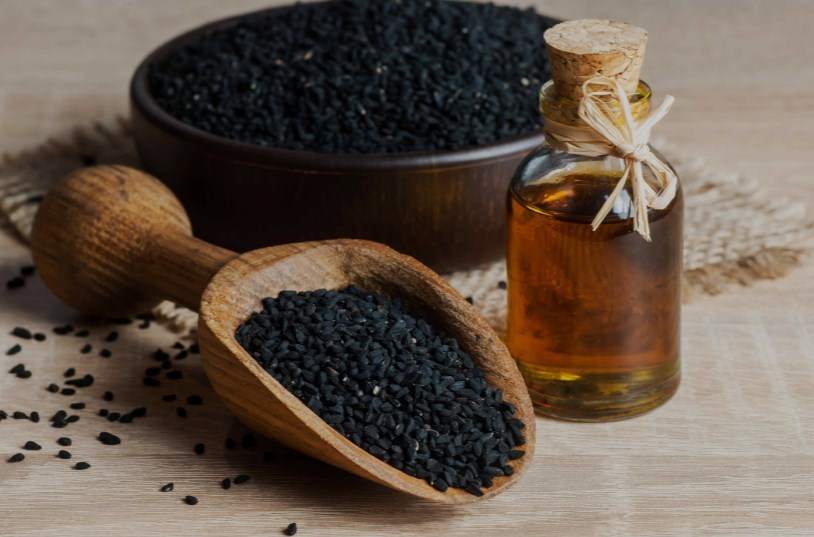
Nigella Sativa – The Remedy For Everything But Death


This humble, but Immensely powerful seed, kills MRSA, heals the chemical weapon poisoned body, stimulates regeneration of the dying beta cells within the diabetic’s pancreas, and yet too few even know it exists.

The seeds of the annual flowering plant, Nigella Sativa, have been prized for their healing properties since time immemorial.  While frequently referred to among English-speaking cultures as Roman coriander, black sesame, black cumin, black caraway and onion seed, it is known today primarily as black seed, which is at the very least an accurate description of its physical appearance.

The earliest record of its cultivation and use come from ancient Egypt. Black seed oil, in fact, was found in Egyptian pharoah Tutankhamun’s tomb, dating back to approximately 3,300 years ago.[i]  In Arabic cultures, black cumin is known as Habbatul barakah, meaning the “seed of blessing.” It is also believed that the Islamic prophet Mohammed said of it that it is “a remedy for all diseases except death.”

Many of black cumin’s traditionally ascribed health benefits have been thoroughly confirmed in the biomedical literature. In fact, since 1964, there have been 458 published, peer-reviewed studies referencing it.

These 22 pharmacological actions are only a subset of a far wider number of beneficial properties intrinsic to the black seed. While it is remarkable that this seed has the ability to positively modulate so many different biological pathways, this is actually a rather common occurrence among traditional plant medicines.

Our project has identified over 1600 natural compounds with a wide range of health benefits, and we are only in our first 5 years of casual indexing. There are tens of thousands of other substances that have already been researched, with hundreds of thousands of studies supporting their medicinal value (MEDLINE, whence our study abstracts come, has over 600,000 studies classified as related to Complementary and Alternative Medicine).

Take turmeric, for example. We have identified research indicating its value in over 600 health conditions, while also expressing over 160 different potentially beneficial pharmacological actions. You can view the quick summary of over 1500 studies we have summarized on our Turmeric Research page, which includes an explorative video on turmeric. Professional database members are further empowered to manipulate the results according to their search criteria, i.e. pull up and print to PDF the 61 studies on turmeric and breast cancer.  This, of course, should help folks realize how voluminous the supportive literature indicating the medicinal value of natural substances, such as turmeric and black seed, really is.

Black seed has been researched for very specific health conditions. Some of the most compelling applications include:

  • Type 2 Diabetes: Two grams of black seed a day resulted in reduced fasting glucose, decreased insulin resistance, increased beta-cell function, and reduced glycosylated hemoglobin (HbA1c) in human subjects.[ii]
  • Helicobacter Pylori Infection: Black seeds possess clinically useful anti-H. pylori activity, comparable to triple eradication therapy.[iii]
  • Epilepsy: Black seeds were traditionally known to have anticonvulsive properties. A 2007 study with epileptic children, whose condition was refractory to conventional drug treatment, found that a water extract significantly reduced seizure activity.[iv]
  • High Blood pressure: The daily use of 100 and 200 mg of black seed extract, twice daily, for 2 months, was found to have a blood pressure-lowering effect in patients with mild hypertension.[v]
  • Asthma: Thymoquinone, one of the main active constituents within Nigella sativa (black cumin), is superior to the drug fluticasone in an animal model of asthma.[vi] Another study, this time in human subjects, found that boiled water extracts of black seed have relatively potent antiasthmatic effect on asthmatic airways.[vii]
  • Acute tonsillopharyngitis: characterized by tonsil or pharyngeal inflammation (i.e. sore throat), mostly viral in origin, black seed capsules (in combination with Phyllanthus niruri) have been found to significantly alleviate throat pain, and reduce the need for pain-killers, in human subjects.[viii]
  • Chemical Weapons Injury: A randomized, placebo-controlled human study of chemical weapons injured patients found that boiled water extracts of black seed reduced respiratory symptoms, chest wheezing, and pulmonary function test values, as well as reduced the need for drug treatment.[ix]
  • Colon Cancer: Cell studies have found that black seed extract compares favorably to the chemoagent 5-fluoruracil in the suppression of colon cancer growth, but with a far higher safety profile.[x] Animal research has found that black seed oil has significant inhibitory effects against colon cancer in rats, without observable side effects.[xi]
  • MRSA: Black seed has anti-bacterial activity against clinical isolates of methicillin resistant Staphylococcus aureus.[xii]
  • Opiate Addiction/Withdrawal: A study on 35 opiate addicts found black seed as an effective therapy in long-term treatment of opioid dependence.[xiii]

Sometimes the biblical reference to ‘faith the size of a mustard seed moving mountains’ comes to mind in connection with natural substances like black seeds. After all, do seeds not contain within them the very hope for continuance of the entire species that bore it?  This super-saturated state of the seed, where life condenses itself down into an intensely miniaturized holographic fragment of itself, promising the formation of future worlds within itself, is the very emblem of life’s immense and immortal power.

If we understand the true nature of the seed, how much life (past, present and future) is contained within it, it will not seem so far-fetched that it is capable of conquering antibiotic resistant bacteria, healing the body from chemical weapons poisoning, or stimulate the regeneration of dying insulin-producing beta cells in the diabetic, to name but only a fraction of black seed’s experimentally-confirmed powers.

Moving the mountain of inertia and falsity associated with the conventional concept of disease, is a task well-suited for seeds and not chemicals. The greatest difference, of course, between a seed and a patented synthetic chemical (i.e. pharmaceutical drug), is that Nature (God) made the former, and men with profit-motives and a deranged understanding of the nature of the body made the latter.

The time, no doubt, has come for food, seeds, herbs, plants, sunlight, air, clean water, and yes, love, to assume once again their central place in medicine, which is to say, the art and science of facilitating self-healing within the human body. Failing this, the conventional medical system will crumble under the growing weight of its own corruption, ineptitude, and iatrogenic suffering (and subsequent financial liability) it causes. To the degree that it reforms itself, utilizing non-patented and non-patentable natural compounds with actual healing properties, a brighter future awaits on the horizon. To the degree that it fails, folks will learn to take back control over their health themselves, which is why black seed, and other food-medicines, hold the key to self-empowerment.

 Source: GreenMedInfo

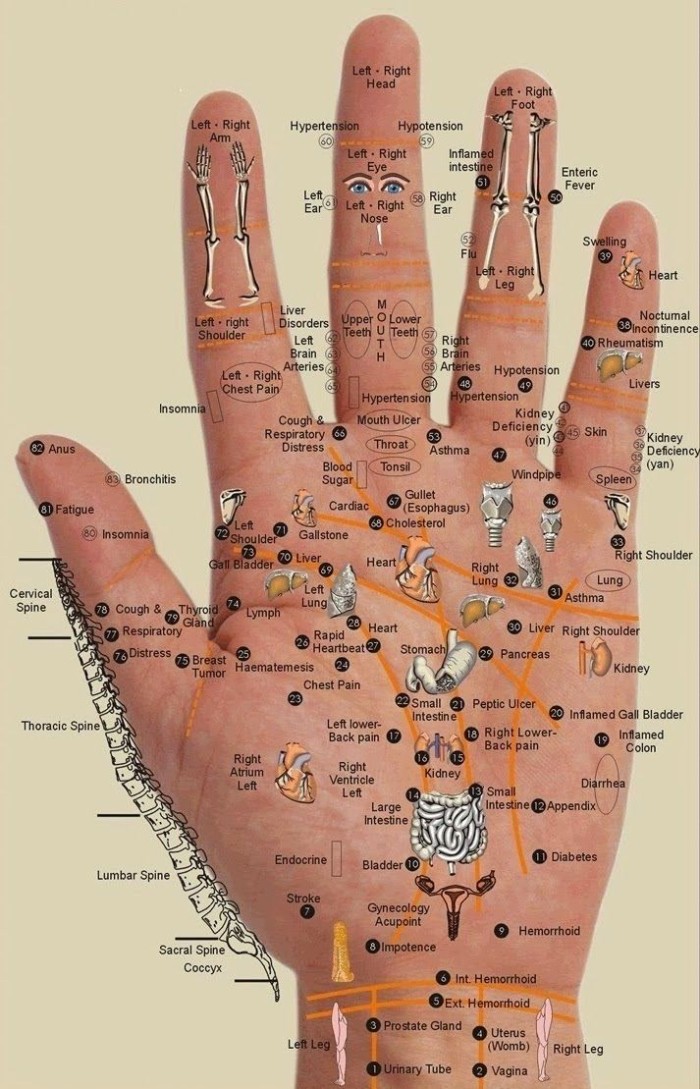
Hand Pressure Points – Every Body Part Is In The Palm Of Your Hand

Western medicine has not yet satisfactorily addressed chronic pain or discomfort in varying parts of our body. Alternative medicine can often be light-years ahead when it comes to relieving pain.

Although a combination of both western and alternative medicine, is probably the most sensible route overall, it is worth looking at the benefits of an alternative form of pain resolution, such as reflexology.


The principles of reflexology have led to the idea of finding the pressure points within the palm of your hand that are connected to the part of the body causing you pain. By pressing the thumb point into the corresponding part of the hand for 5 seconds, releasing for 3 seconds, pressing again and repeating this cycle for several minutes, several times a day you will get results. This methodology as well as others are demonstrated in this video.

In the video you are about to watch, Dr. Oz’s guest is a reflexologist who explains that both the hands and feet can be seen as a microcosm of our entire body. Five audience members come to the stage to explain what part of their body is causing them chronic discomfort or pain. For each malady, the reflexologist explains which part of the palm is connected to the body part involved. She then demonstrates how using one hand, different forms of pressing or massaging of a particular part of the palm of the other hand will, over time, alleviate the pain experienced.

The audience members in this video suffered from: (1) Constipation and bloating (2) Insomnia and exhaustion (3) Sinus congestion (4) Upper back pain (5) Low libido. The reflexologist showed them how to work on their own palms to alleviate their pain or problem. She explained what sensations they would experience as they applied pressure and massage, that would signal that they were working in the correct area. Her explanations were fascinating and easy to follow.


After watching this I will try a few of the methods demonstrated for things that I need relief from. Let us know what you think about reflexology after watching the video. Have you ever tried it and had success? Will you give it a try?

September 10, 2015


Understanding Cannabis Oil

cannabis-oil_2

Although I’ve been aware of the recent positive discussion  of cannabis oil as a treatment for various serious diseases, I was still skeptical to consider this as a viable solution for certain health disorders. After all, so many people these days are looking for the perfect miracle pill to solve their health issues! Is this another panacea? Is this another way of buying into the mentality of one-size-fits-all treatments that come in  a  bottle without making any necessary dietary and life style changes?

In the end, it all depends on how we really make use of these extracts that nature provided us and how clearly we see the “big picture” of true healing.

So it was time I found out more! I interviewed one of my colleagues with extensive knowledge on the matter – Steven Sinay, VP of Nutritional Science for Empower Genetics and a fellow Metabolic Typing practitioner.  This article is what  he kindly shared with me on  the  very interesting topic of cannabis oil.

Understanding Cannabis Oil

Raluca Schachter: What is cannabis oil and how does it work?

Steven Sinay: Cannabis Oil is a thick, sticky, resinous substance that is extracted from the cannabis plant (Cannabis sativaor Cannabis indica). Cannabis oil is a base product that is prepared by separating the resins from the cannabis flowers (buds) using a solvent extraction process. Cannabis oil contains several Cannabinoids including Tetrahydrocannabinol (THC), the psychoactive component, and Cannabidiol (CBD), the medicinal component of cannabis.

For legal purposes becoming more commonly used over Cannabis oil, is Hemp oil which is being grown in Europe to have higher levels of CBD and with no THC. In 2001, the DEA issued a rule banning all import and cultivation of industrial grade hemp. In 2003, the Hemp Industries Association filed an Urgent Motion for Stay in the Ninth Circuit Court of Appeals. In 2004, the Ninth Circuit Court sided with the Hemp Industries Association.

In the decision, Judge Betty Fletcher wrote, “[T]hey (DEA) cannot regulate naturally occurring THC not contained within or derived from marijuana-i.e., non-psychoactive hemp is not included in Schedule I. The DEA has no authority to regulate drugs that are not scheduled, and it has not followed procedures required to schedule a substance. The DEA’s definition of “THC” contravenes the unambiguously expressed intent of Congress in the Controlled Substances Act (CSA) and cannot be upheld.”

Judge Fletcher is essentially saying that the DEA cannot regulate hemp or the chemicals within it because hemp contains no THC, is not marijuana, and is therefore not covered under  the controlled substances act; and the DEA cannot regulate substances that have not been scheduled. This is why you can purchase and sell CBD hemp oil.

Over the last 20 years Cannabis has been at the center of one of the most exciting and underreported developments in recent modern science. Research on marijuana’s effects led directly to the discovery of an unknown biochemical communication system in the human body, the Endocannabinoid System, which plays a crucial role in regulating our physiology, mood, and everyday experience.

The discovery of receptors in the brain that respond pharmacologically to Cannabis and the subsequent identification of endogenous cannabinoid compounds in our own bodies that bind to these receptors has significantly advanced our understanding of human biology, health, and disease.

It is an established scientific fact that cannabinoids and other components of cannabis can modulate many physiological systems in the human brain and body. Cannabinoids are chemical compounds that trigger cannabinoid and other receptors. More than 100 cannabinoids have been identified in the marijuana plant. Of these, THC and CBD have been studied most extensively. In addition to cannabinoids produced by the plant, there are endogenous cannabinoids (anandamide and 2AG) that occur naturally in the body, as well as synthetic cannabinoids created by pharmaceutical researchers.

Cannabinoids promote homeostasis at every level of biological life, from the sub-cellular, to the organism, and perhaps to the community and beyond. Here’s one example: autophagy, a process in which a cell sequesters part of its contents to be self-digested and recycled, is mediated by the cannabinoid system. While this process keeps normal cells alive, allowing them to maintain a balance between the synthesis, degradation, and subsequent recycling of cellular products, it has a deadly effect on malignant tumor cells, causing them to consume themselves in a programmed cellular suicide. The death of cancer cells, of course, promotes homeostasis and survival at the level of the entire organism.

Scientists associated with the International Cannabinoid Research Society (ICRS) have elucidated a number of molecular pathways whereby CBD exerts a therapeutic impact. A preclinical study by Dr. Sean McAllister and his colleagues at the California Pacific Medical Center in San Francisco reports on how CBD kills breast cancer by down regulating a gene called ID-1, which is implicated in several types of aggressive cancer. Silencing the ID-1 gene is thus is an excellent strategy for a cancer treatment.

Extensive preclinical research much of it sponsored by the U.S. Government (see U.S. Patent below) indicates that CBD has potent anti-tumoral, antioxidant, anti-spasmodic, anti-psychotic, anti-convulsive, and neuroprotective properties. CBD directly activates serotonin receptors, causing an anti-depressant effect, as well.

The United States Government holds U.S. Patent 6,630,507 (filed 1999) on Cannabinoids stating in their patent: “Cannabinoids have been found to have antioxidant properties, unrelated to NMDA receptor antagonism. This new found property makes cannabinoids useful in the treatment and prophylaxis of wide variety of oxidation associated diseases, such as ischemic, age-related, inflammatory and autoimmune diseases. The cannabinoids are found to have particular application as neuroprotectants, for example in limiting neurological damage following ischemic insults, such as stroke and trauma, or in the treatment of neurodegenerative diseases, such as Alzheimer’s disease, Parkinson’s disease and HIV dementia. Nonpsychoactive cannabinoids, such as cannabidiol, are particularly advantageous to use because they avoid toxicity that is encountered with psychoactive cannabinoids at high doses useful in the method of the present invention.”

Raluca Schachter: Under  what conditions has cannabis oil proved to be most successful?

Steven Sinay: According to many CBD Researchers the following are a list of conditions that the use of CBD has been shown to improve: Acne, ADD/ADHD, Addiction, AIDS, ALS, Alzheimer’s Disease, Anorexia, Antibiotic Resistance, Anxiety, Atherosclerosis, Arthritis, Asthma, Autism Spectrum Disorder, Bipolar Disorder, Cancer, Colitis/Crohn’s, Depression, Diabetes, Endocrine Disorders, Epilepsy/Seizure, Fibromyalgia, Glaucoma, Heart Disease, Huntington’s Disease, Inflammatory Disorders, Irritable Bowel Syndrome, Kidney Disease, Liver Disease, Metabolic Syndrome, Migraines, Mood Disorders, Motion Sickness, Multiple Sclerosis, Nausea, Neurodegeneration, Neuropathic Pain, Obesity, OCD, Osteoporosis, Parkinson’s Disease, Prion/Mad Cow Disease, PTSD, Rheumatism, Schizophrenia, Sickle Cell Anemia, Skin Conditions, Sleep Disorders, Spinal Cord Injury, and Stress Stroke/TBI.


Raluca Schachter: What should we look out for, in terms of the quality of  cannabis oil?

Steven Sinay: Since cannabis oil products have only been in the market place for a short period of time, it is important to source these products just as you would your produce, meat, fish, etc. As far as I can tell there are not a lot of regulatory organizations monitoring the quality and purity of these sources. Be sure to look for a product that has gone through some sort of third party lab testing that detect contaminants like pesticides, fungicides, mycotoxins, microbes, etc. Equally as important consumers need to be aware of the concentration of their medicinal cannabis.

It is fundamental in allowing the consumer to choose the correct medicine for their symptoms, as well as determining the proper dose. It’s good practice to find a manufacturer that is not afraid to allow access to each Certificate of Analysis on every batch they produce.  Here in the United States a non THC CBD product is classified as a dietary supplement and is legal in all 50 states.

Raluca Schachter: The nutritional world is quite flooded with hypes these days. But as we know through Metabolic Typing ®, there is no nutrient, remedy or food that can be beneficial for everybody. Any nutrient has different effects in different metabolisms, biochemically speaking. So there are no one size fits all remedies, really. From your experience, have you had the chance to observe how this remedy had different effects in different metabolisms?

Steven Sinay: As previously mentioned, at the right dosage, CBD has been shown to significantly help with anxiety, pain, neurodegeneration, inflammation, etc. An appropriately high dosage of CBD will give you all the desired effects you need, and there is really no risk of overdose as CBD is harmless even in high concentrations. However, most people will feel little effect if they take too low a dosage, effectively wasting CBD’s powerful beneficial properties.

With the above in mind, the importance of correct CBD dosage becomes obvious. People with different requirements and different metabolisms will need accordingly different CBD dosages to experience CBD’s positive effects, and dosages can vary dramatically because there is no one-size-fits-all “typical CBD dosage.” While there is no such thing as “too much CBD,” you can in fact take too little to feel a difference. Dosage can range anywhere from 2-3 mg, up to 100 mg, 200 mg,  or 500 mg to 1000 mg on the super high end. Remember, you cannot overdose and there are no reported side effects from taking high concentrations of CBD. Most people only need around 2-3 mg per day to start feeling a difference. Yet people with stronger needs may need to start at a lower dose and work their way up until they find the right dose for their body.

Raluca Schachter: What are your thoughts regarding the future of cannabis in the medical field?

Steven Sinay:  This is the $64,000 Dollar Question! With our government holding a patent on several Cannabinoids, it leads one to be a little skeptical. Why? The forces that would keep cannabis illegal are vocal and very well-funded, but they are not impervious to persistent effort. The lynch pin in the War on Drugs has always been cannabis. Without the suppression and interdiction of this popular and widely used substance, there simply would not be enough “illegal drug use” going on to justify the huge amount of money and resources spent on “fighting drugs.” Once again all based on the all mighty dollar!

I feel CBD and other Cannabinoids with the persistence from those who can, and are truly benefiting from its medicinal properties, along with natural healers promoting its use, will find its place in future modern medicine. Time will tell.

By  Raluca  Schachter

Contributing Writer for Wake Up World

10 Ways To Empty Your Lymphatic System From Toxins

lymphatic-system-drainage
Yesterday I wrote an article about the lymphatic system sharing the three most important actions to take on a daily basis to drain your lymph fluids and quite a few people asked how else to drain lymphatic fluids so I decided to create a nice size list to share with you so that you could engage in these practices as often as you’d like to see results faster. The lymphatic system is very important in the human body. The lymphatic system is composed of tissue and fluids and runs mostly throughout your entire body just like your circulation does. One key difference between lymphatic tissue and your circulation is that the lymphatic system does not have a heart (pump) to move it throughout the body. This is why consistent daily exercise and hydration are crucial to keep the lymphatic system and lymph nodes healthy.If your lymphatic system is congested, or lymph nodes are swollen this will result in different aches and pains. Your joints could have pain or feel weak, your immune system is compromised dramatically because your immune system works directly with your lymphatic system. Your liver and kidneys become toxic because they aren’t draining toxins and chemicals from the lymphatic system to excrete them from the body as it should be. This can lead to weight gain, digestive disorders, being sick more often, hormonal imbalances, poor circulation, and much more.

Thankfully there are more than a few ways to stimulate your lymphatic system though and it’s important to stay on top of it each and every single day.

10 Ways To Empty Your Lymphatic System From Toxins:

1. Exercise: Exercise moves the lymphatic system and lymph fluids and circulates them to your liver and kidneys to be filtered and excreted from the body. You should walk briskly or engage in high intensity workouts every single day. Do one or both, but move faster than a slow walk every single day to get the lymphatic system moving.

2. Water: The lymphatic system is rich in water and if you’re dehydrated the entire system will be holding onto water for dear life. You need new water to filter the lymphatic system, and to help excrete and remove chemicals and toxins through your liver and kidneys. A good rule of thumb is to drink 50% of your body weight in ounces of water each day. Example: If you weigh 100 pounds, drink 50 ounces daily.

3. Breath work: Breathing does so much for your body, from calm your heart and nervous system to change brainwaves and even to help the lymphatic system drain and stay healthy. By taking deep breathes in through your nose and out through your mouth you’re giving your body more oxygen to work with. Oxygen and Hydration are two essential parts to keeping the lymphatic system clear of impurities. Exercise also helps you breathe deeply by exerting energy so exercise gives you multiple lymphatic draining benefits.

4. Rebounding: Rebounding is simply jumping on a small trampoline up and down. It doesn’t take much energy but is a slight workout that get’s your heart rate and breath up. It uses the force of gravity to move your lymphatic system and to detoxify cells by going in an up and down motion. This is a great exercise for lymphatic drainage as well as overall health and well-being. You can look for rebounders by clicking here.

5. Massage: Massage works by hands physically moving your lymphatic tissue. Deep tissue massage will work to move the lymphatic tissue to drain it most but any form of massage is beneficial. Massage is a way to squeeze the lymphatic system to remove impurities so that new hydration and nutrients can keep the lymphatic system healthy and able to do it’s job.

6: Laughter: Believe it or not laughter is an effective method for helping the lymphatic system. Laughing causes you to take deeper breaths which is once again beneficial but it also stimulates your lungs, circulation and other organs that create more harmony working with the lymphatic system. You need to make it an effort to laugh at least a few times daily for not only your lymphatic system but your heart, immunity, brain and overall sense of well-being.

7. Skin Brushing: Dry skin brushing is taking a brush and rubbing it around your entire body. It is similar to massage except for it’s not quite as deep into the tissue and it’s a great way to exfoliate dead skin cells. It works best right before a bath or shower so you don’t have a layer of dead skin cells on your skin. You can get a dry skin brush by clicking here.

8. Take A Hot+Cold Shower: I personally love taking a hot+cold shower because it’s so invigorating. What is a hot+cold shower you ask? it’s a shower where you turn the water hot, then cold, then hot, then cold. You continue switching the temperature of the water. It’s extremely invigorating and the change in temperature stimulates your lymphatic system to move as well as circulation by expanding and contracting blood vessels. It’s a great practice that will leave you feeling extremely rejuvenated.

9. Eat Raw Fruits: Fruits are great for stimulating the lymphatic system to drain. The key here is to eat fruits raw (uncooked) and to eat them on an empty stomach so that the acids and enzymes in the fruit have the best lymphatic draining and stimulating effects. Lemon, lime and grapefruit work well. You can also get these in therapeutic grade essential oils to add to your water and drink throughout the day to stimulate lymphatic drainage and overall digestive detoxification.

10. Use Essential Oils Topically: You can apply ginger, peppermint and rosemary essential oils topically on lymph nodes throughout your body to stimulate drainage. Specifically on the back of your neck is a great spot to apply these oils to get into the skin, circulation and lymph nodes and allow them to go to work. I use certified pure therapeutic grade essential oils which can be found here.

There you have it, 10 different ways to stimulate the lymphatic system to drain and detoxify. The more of these you engage in the more you’ll feel the benefits of a healthy lymphatic system. I hope you try these out and keep them as consistent practices.

By   July 7, 2015

11 Tips to De-Stress Your Life

11 Tips to De-Stress Your Life


Image credit: Pixabay

Have you ever wondered why after a stressful experience – like getting into a fight with your spouse or hearing that your office is announce massive layoffs, you have a physical reaction like a headache or stomach pain? According to the Huffington Post, this is because “the majority of stressors facing humans were physical (lions and tigers and bears, oh my!), requiring, in turn, a physical response.”

Being stressed isn’t a fun experience. On top of the physical symptoms, stress can lead to insomnia, depression and a decrease in work production, with serious implications for your personal and professional life.

Being entrepreneurs, we get stressed all the time. I get stressed at everything from traffic on the way to work to my current hosting startup on the brink of disaster! Believe me, this is something we all have to deal with from time to time. To avoid letting stress consume your life, here are 11 tips that I use to kick stress to the curb.

1. Identify triggers.

Melissa Eisler states on the Chopra Center website that “Recognizing the triggers to your stressful reactions is an important first step in managing your stress.” She suggests you can discover these triggers by asking obvious questions like “What stresses you out? And how do you react to it?”

After figuring out what exactly is working you up, you can create a list of your top triggers and then work on eliminating them if possible, or at least changing your reactions.

2. Be healthy.

It’s been proven time and time again that one of the best ways to relieve stress is by being healthy. Whether it’s going for a walk, taking a yoga class, staying away from treats like doughnuts and getting a good night’s rest, taking care of your body is one of the most common and effective ways to reduce stress in your life.

I find that when I’m healthiest in my life, I have the least amount of stress.

3. Get organized.

Whether it’s in the home or at the workplace, disorganization is one of the most common stress triggers. After all, it’s frustrating when you can never find that one thing you’re looking for. That’s why you should not only straighten up your home or office, but develop a system to keep it organized. Woman’s Day has 100 Organizing Tips that you should check out.

4. Stop procrastinating.

The Association for Psychological Science states that “people who procrastinate have higher levels of stress and lower well-being.” To help you get out of this harmful trip, Leo Babauta suggests you create a Do It Now (DIFN) habit. Do your most important task first or only work on a challenging project for 10-minutes.

5. Turn off your phone.

Richard Balding, a psychologist in the department of psychology at the University of Worcester, England discovered that smartphones can lead to stress. Why? Because they have created “a relentless need to immediately review and respond to each and every incoming message, alert, or bing.”

While you can’t keep the phone off 24/7, you should have certain times planned throughout the day to keep the phone off for a little piece of mind.

6. Do something that makes you happy.

Between all of your obligations and responsibilities, you may think you no longer have time for the hobbies that used to make you happy. To reduce the stress in your life, make the time to do something pleasurable. It could be something as simple as enjoying your favorite show, taking a nap, going to the movies, talking to a friend, listening to your favorite music, or planning a vacation to your favorite destination.

7. Stop filling up the calendar.

Commitments never end. Between work, your family, social activities and civic duties, you have a full schedule. This becomes a problem when commitments conflict with each other or begin to overrun your life.

If you edit your list of commitments, you will likely notice you suddenly do have some much needed free time, which will help destress your life. We all have the same 24 hours in each day – what are you filling your hours with?

8. Accept people for who they are.

Is there anything more frustrating than a coworker who chews with their mouth open or the spouse who never washes dishes or the neighbor who blasts their music too loudly? No matter how much the people closest in your life add to your stress level, you have to accept them for who they are.

Daylle Deanna Schwartz, recommends on the Huffington Post that you use Reality Training, which “means recognizing that if you want to be happy, you need to accept people as they are and find ways to deal with how they are, or don’t.”

9. Be grateful.

Research from renowned psychologists Robert Emmons and Michael McCullough discovered “Grateful people report higher levels of positive emotions, life satisfaction, vitality, optimism, and lower levels of depression and stress.”

Mark Williams and Danny Penman authors of “Mindfulness: An Eight Week Plan for Finding Peace in a Frantic World,” suggested on CNN that you perform a 10-finger gratitude exercise everyday. This simply means thinking of 10 things you’re grateful for.

10. Avoid multitasking.

We’re all extremely busy, which is why multitasking seems like a great idea on paper, but actually only adds to our already stressful lives. According to David Meyer, PhD, a professor of psychology at the University of Michigan (via Chris Woolston, MS on HealthDay) “ juggling tasks can be very stressful. In the short-term, stress makes you feel lousy. In the long-term, it can become a serious threat to health.”

If you need assistance with avoiding multitasking, check out these tips from Zen Habits.

11. Pucker up.

WebMD cites a study led by Laura Berman, Ph.D., assistant clinical professor of psychiatry and ob-gyn at Northwestern University’s Feinberg School of Medicine, which studied 2,000 couples. The study discovered that couples who only kiss during lovemaking are “eight times more likely to report suffering from stress and depression than those who frequently kiss on the spur of the moment.”

Dr. Berman states: “Kissing relieves stress by creating a sense of connectedness, which releases endorphins, the chemicals that counteract stress and depression.”

Besides making you happier, lowering your stress level has proven medical benefits. So, grab your favorite book, pucker up, be grateful for what you have, and stop over scheduling yourself. Taking just a few of these steps will lead to a happier, healthier you.

Contributor – John Rampton

5 Ways to Improve the Performance of Your Greatest Asset: You

5 Ways to Improve the Performance of Your Greatest Asset: You

Image credit: Snapwire Snaps

We are constantly looking for ways to enhance, grow and improve our assets, but we often overlook the most important one of them all. Your greatest asset is not your bank account, stock portfolio, 401(k) or real estate holdings — it’s you.

What are you doing to make sure you perform at your very best? Imagine if your personal performance started to suffer — your business would soon follow. Here are five simple ways to improve the performance of your greatest asset.

1. Prioritize your health and wellness.

For your business to thrive, you need to be involved. This won’t happen if you are in and out of the hospital with health issues. Regular exercise and an intelligent diet helps your body and mind operate at peak performance.

Time is a rare commodity — but make sure to carve out at least 30 minutes a day for physical exercise. If you are bound to a desk and chair all day make sure to get up and stretch every hour. A mid-day walk also goes a long way to help combat the health risks associated with sitting for long periods of time.

2. Delegate and outsource all of your busy work.

You will operate so much more efficiently if you can eliminate all of the busy work that typically slows you down. When you don’t have tedious tasks pulling at you from all directions you can focus 100 percent of your attention on the objectives that directly impact the growth of your business.

Learning to delegate was difficult for me at first — I felt like I had to do everything myself to ensure it was done correctly. I learned to trust the people I have in place and delegation has allowed me to focus on more important parts of my business related to growth. More doors and opportunities have opened up simply because I pushed all of those little time sucking tasks off my daily plate.

3. Don’t hold back stress and anger. Voice your opinion.

If you ignore the issues that are causing you to become stressed out and angry it’s just going to keep building up until you explode. This isn’t good for anyone involved — it’s best to address anything that upsets and angers you on the spot.

Sure, take time to assess the situation and come up with a well thought-out solution, but don’t keep putting it off and letting it build up. When you don’t have pending issues or stress on your mind you can devote all of your energy to what’s important — working on your business and working towards your goals.

4. Have fun, and include your team members.

If you aren’t having fun then you need to reconsider what you are doing and try something new. Having fun is one of the most overlooked components of success. Sales, money and growth are usually on top of the priority list — but if you aren’t having fun you are going to burn out and your performance will suffer, eventually impacting your business.

The same concept applies to your employees and team members — if they are having fun they are going to enjoy what they are doing, and that will directly impact how they perform. Make sure you create a fun work environment but also consider hosting an out-of-the-office event once a month or even once a quarter — something as simple as an evening of bowling can really help to keep the fun vibe alive and well.

5. Find a mentor.

Ask every successful entrepreneur for one piece of advice and you will undoubtedly have several of them tell you to get a mentor. You aren’t going to have the answer to every question and some situations are going to leave you seeking help.

Rather than stress out or scramble for a solution you can simply pick up the phone knowing you will have someone on the other end that is there to help. Having a mentor that you know you can turn to any time eliminates a lot of unnecessary stress. Less stress equals better personal performance.


Jonathan Long – July 02, 2015

Uncovering 5 Cannabis Misconceptions

Harvesting Cannabis

We have to admit, it makes sense why many people misunderstand cannabis and the benefits it holds for both individuals and society. Cannabis, after all, has been fraught with decades of misguided stereotypes, scare tactics, and inaccurate information masquerading as facts. Our legal system and anti-drug policies make it even harder to debunk these outlandish myths, as they themselves encourage misuse, perpetuate stereotypes, and spread fear-based messaging and biased conclusions, leaving society uninformed and struggling to separate the truths from the lies.

Exposing these false messages through research and awareness is our best bet at eliminating the misconceptions surrounding cannabis. Here are five misleading anti-cannabis sentiments we’ve all probably heard at some point or another. For each of these points, we state the facts and logic to debunk the arguments so you can decide on your own what to believe.


1. “Cannabis is a gateway drug.”

Heroin use

This myth has persisted despite being debunked on numerous occasions. It shouldn’t be surprising that people who consume harder, more illicit drugs have potentially consumed cannabis as well. We can say the same for alcohol and tobacco, yet, we don’t consider them a gateway to drug abuse because it’s foolish to associate a correlation as a cause.

The missing logic from the gateway argument unfolds even further when you look to its larger social implications. In a post on Psychology Today, Constance Scharff, Ph.D, points to alcohol and tobacco as the more sensible ‘gateway’ drugs:

“Many people mistakenly believe that marijuana use precedes rather than follows initiation of other illicit drug use. In fact, most drug use begins with alcohol and nicotine before marijuana, making nicotine and alcohol the two most common drugs of abuse.”

Aside from the confusing differentiation of cannabis, alcohol, and tobacco, Dr. Karen Van Gundy, Associate Professor of Sociology at the University of New Hampshire, recently completed a study on cannabis showing other factors of causation hidden in the gateway myth:

“But pot does serve as a ‘gateway’. Mainly for young people who are poor, unemployed and subjected to severe psychological stress.”

Larger social issues are at play here, so claiming that cannabis is a gateway drug is ignoring the numerous and complex factors, from environmental to psychological, that account for why heavy drug users turn to a variety of substances.


2. “Marijuana is worse for your lungs than tobacco.”

Cigarettes

Hats off to the tobacco corporations who’ve successfully perpetuated the idea that smoking cannabis is more harmful to your lungs than cigarette smoke — a crux of capitalism rather than science. No matter the projected rationale behind these arguments, whether it’s harping on the lack of filters or claiming that you inhale longer with marijuana, no study proves marijuana to contain more harmful effects than tobacco.

The Journal of the American Medical Association (JAMA) published a study in 2012 indicating that smoking cannabis was not linked with lung damage:

“Marijuana may have beneficial effects on pain control, appetite, mood, and management of other chronic symptoms. Our findings suggest that occasional use of marijuana for these or other purposes may not be associated with adverse consequences on pulmonary function. It is more difficult to estimate the potential effects of regular heavy use, because this pattern of use is relatively rare in our study sample; however, our findings do suggest an accelerated decline in pulmonary function with heavy use and a resulting need for caution and moderation when marijuana use is considered.”

Another study found that cannabis and tobacco smoke are not equally carcinogenic, and research led by the University of California San Francisco in conjunction with the University of Alabama at Birmingham found that cannabis is less damaging to the lungs than tobacco.

We aren’t saying that smoking marijuana doesn’t have any negative effects on your lungs — any sort of inhalation can have repercussions on your pulmonary health. But research has indicated on multiple occasions that tobacco is more harmful to your lungs than cannabis. Keep in mind that for both tobacco and cannabis, the resulting effect on your lungs is dependent on the quantity you consume.

If you’re concerned about your lung health as a cannabis user, remember that there are many other ways to consume cannabis without smoking it. Legalization opponents miss the mark when they spout this one off. Put this one to rest, people.


3. “Cannabis use leads to crime.”

Cannabis and crime

Here’s an example of propaganda at its best: the 1936 film Reefer Madness. Prohibition and anti-cannabis supporters still ride the waves of fear induced by a film that’s almost 80 years old. It makes sense to link cannabis to crime if you don’t want it around but, similar to the gateway myth, the argument is blind to the bigger social issues.

This myth hangs on to a premise that largely relies on the status of cannabis in our legal system. Crime trends and statistics used to fuel the argument against legalization don’t make sense, as the whole point is to end those arrests and allocate police attention to the real issues.

To take a look at how crime and cannabis really interconnect, we refer to a study in London that decriminalized cannabis for a year in the borough of Lambeth. Results showed a large drop in crime rates across the board, even in non-drug related crimes:

“We use the key lessons from this localized policing experiment to shed light on what would be the impacts on crime if the same policy were to be applied citywide, by developing and calibrating a model of the market for cannabis and crime, we account for the behavior of police and cannabis users.”

This policy change decreased crime and allowed the borough to further understand how cannabis functions in their community. The authors also noted how police were able to prioritize higher-risk crimes, improving the overall safety of the borough rather than tackling low-risk cannabis offenses. Can you imagine if the entire US adopted this model?

Speaking of the United States, in March, The Washington Post reported the significant and positive impact Colorado’s retail cannabis legalization has been having on Denver crime:

“The total number of marijuana court cases fell from 39,027 in 2011 to 2,036 cases in 2014. Those 37,000 fewer cases represent a savings of untold millions of dollars in court costs and law enforcement fees. They represent 37,000 fewer people who have to deal with the stigma and financial burden of an arrest and possible conviction.”

Cannabis isn’t indicative nor a cause of criminal behavior. Rather, anti-drug policies use cannabis as a scapegoat for community issues, which only results in promoting illicit activity and the black market rather than eliminating it.


4. “Cannabis is addictive.”

Cannabis user on couch

A simple guideline when it comes to using cannabis is to consume responsibly and within moderation. Anything can be considered harmful if it’s done or used in excess. People can be addicted to food, exercise, and even sleep when that’s all they do, all of which are perfectly legal activities.

The National Institute on Drug Abuse tells us that 9% of users become dependent on cannabis, which is unfortunate, but less overwhelming than cannabis opponents would have you believe. The organization describes the symptoms of marijuana addiction as “linked to a mild withdrawal syndrome”:

“Frequent marijuana users often report irritability, mood and sleep difficulties, decreased appetite, cravings, restlessness, and/or various forms of physical discomfort that peak within the first week after quitting and last up to 2 weeks.”

Addiction is an issue with all substances, which is why both awareness and mindset are crucial when using cannabis. The potential harm, no matter how minimal, should be combated through education and proper protocol, not fear and misinformation.


5. “We all know what stoners look like.”

Stereotypical stoner

This one doesn’t need science to be debunked; instead, it requires a moral conscience and a willingness to dispel stereotypes as a way of seeing the world. The cannabis archetype is set in stone: Cheech and Chong, Snoop Dog, Scooby and Shaggy all come to mind, but they aren’t the only stoners out there (not to mention how truly successful these so-called “lazy” stoners actually are).

Morgan Freeman, Jennifer Aniston, Maya Angelou, George Clooney, and many other successful people have all used cannabis, and they all look, live, and consume differently. There’s no one way or one type of person who consumes.

Not convinced? Check out these cannabis-friendly people, many of whom you probably recognize. Do all of them fit neatly into the archetypical stoner image?

We’ve got some work to do before the stereotypes and myths disappear, but consuming responsibly and being sensible with how we introduce the truths to others will lead to great things.

By Nick Elam — 6/30/2015